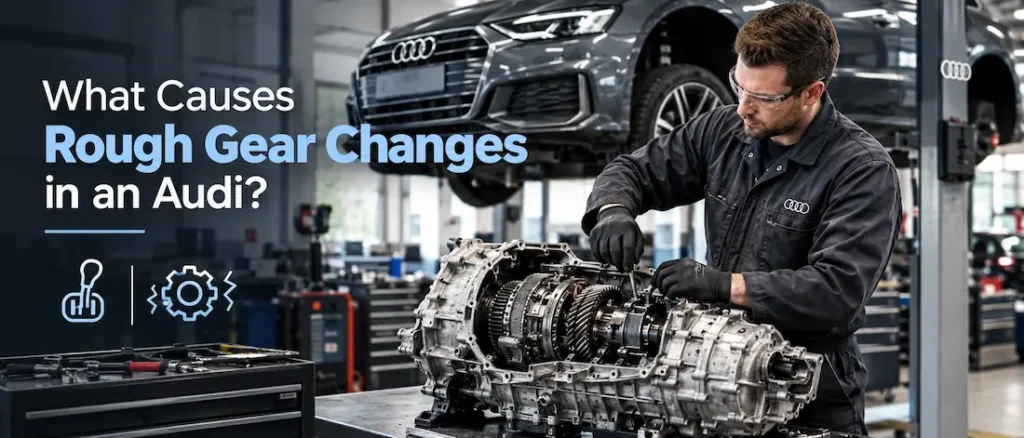
Smooth gear changes are an important part of a comfortable Audi driving experience. When the gearbox starts shifting with a jerk, delay, or sudden movement, it can make even a short drive feel uncomfortable. It can also point to a problem that should not be ignored.
Rough gear changes can be caused by old transmission fluid, low fluid levels, worn clutch parts, faulty sensors, software issues, or problems with the gearbox control system.
Engine faults can also affect how the transmission shifts. Finding the cause early can help prevent further wear and more expensive repairs.
Most Common Causes of Rough Gear Changes in an Audi
1. Old or Contaminated Transmission Fluid
Transmission fluid helps lubricate internal parts and allows the gearbox to work smoothly. Over time, the fluid can lose its useful properties and collect small amounts of dirt or wear material.
When this happens, gear changes may become harder or less smooth. Old fluid may also affect the pressure needed for proper gear changes. Drivers may notice a jerk when moving from one gear to another or a delay before the next gear engages.
The correct fluid type and service interval depend on the Audi model and gearbox. A technician should check the fluid condition before deciding whether it needs replacement.
2. Low Transmission Fluid Level
A low fluid level can also lead to rough shifting. Transmission fluid is needed to create the hydraulic pressure used by many automatic gearboxes. If the level drops too far, the gearbox may struggle to engage gears correctly.
Low fluid should not simply be topped up without finding out why it dropped. Transmission systems are normally sealed, so a low level may indicate a leak.
Oil around the gearbox, wet areas underneath the vehicle, or a burning smell can be signs of trouble. Early inspection can help find a leak before it causes more serious internal damage.
3. Worn Clutch Packs
Some Audi models use dual-clutch transmissions, where clutch packs control different groups of gears. These clutch parts experience wear during normal driving, especially in heavy traffic where the gearbox repeatedly changes between low gears.
As the clutch wears, gear changes may become less smooth. The vehicle may jerk when pulling away, hesitate before moving, or feel rough during low-speed shifts.
Heat and frequent stop-and-go driving can increase the load on the clutch system. If clutch wear is suspected, a proper transmission inspection can determine whether adjustment, service, or replacement is required.
The gearbox uses sensors to monitor speed, temperature, pressure, and gear position. This information helps the transmission control unit decide when and how to change gears. If one of these sensors gives incorrect information, shifting may become rough or delayed.
A faulty sensor can sometimes trigger a warning light, but this is not always the case. Drivers may only notice unusual gear changes at first.
A diagnostic scan can identify stored fault codes and provide useful information. However, technicians should test the sensor and related wiring before replacing it, because another electrical problem may be causing the incorrect reading.
5. Problems With the Mechatronic Unit
The mechatronic unit is an important part of many Audi automatic and dual-clutch transmissions. It combines electronic controls with hydraulic functions to manage gear changes.
If this unit develops a fault, the transmission may struggle to select the correct gear or control clutch pressure. Possible signs include harsh shifting, delayed gear engagement, warning messages, or the gearbox staying in one gear.
Heat and contaminated fluid can place additional stress on the unit. Because the mechatronic system is complex, guessing at the cause can lead to unnecessary repairs. A detailed diagnostic check is usually needed to identify the exact fault.
6. Transmission Software Issues
Modern Audi gearboxes use software to control shifting. The transmission control system learns driving patterns and uses sensor information to decide when to change gears. If the software has a problem or the gearbox settings become incorrect, shifting behavior may change.
An Audi may begin changing gears more harshly after certain faults or control system problems. In some cases, a software update or adaptation procedure may solve the issue.
However, software should not be blamed without proper testing. A technician can check for stored codes, software updates, and transmission adaptation values before deciding what action is needed.
7. Engine Problems Can Affect Gear Changes
A rough gear change does not always mean the transmission itself is damaged. Engine problems can also affect shifting because the engine and gearbox work closely together.
A misfire, faulty airflow sensor, throttle problem, or poor engine performance can change the way the transmission responds.
For example, if the engine is not producing power smoothly, the gearbox may appear to shift roughly even though the main problem is elsewhere. This is why a complete diagnostic check is useful.
Technicians should look at both engine and transmission data instead of focusing only on the gearbox.
8. Excessive Heat From Abu Dhabi Driving
High temperatures can be hard on vehicle fluids and mechanical parts. Audi drivers in Abu Dhabi may also deal with long traffic jams, frequent braking, and extended AC use.
These conditions can increase heat around the engine and transmission. When transmission temperatures become too high, fluid performance can be affected. Continuous heat can also place stress on seals, clutch components, and electronic control parts.
If rough shifting becomes worse after long periods in traffic or during very hot weather, temperature should be considered during diagnosis. Regular maintenance can help keep the cooling and transmission systems in better condition.
Internal wear is another possible reason for rough gear changes, particularly on a vehicle with high mileage or a history of poor maintenance. Gears, bearings, clutch parts, seals, and other internal components can wear over time.
The symptoms may include repeated jerking, slipping, unusual noises, delayed engagement, or difficulty selecting certain gears. Metal particles in the transmission fluid may also point to internal wear.
Continuing to drive with serious gearbox symptoms can increase the damage. If the problem continues after basic checks, a specialist may need to inspect the transmission more closely.
How Can You Tell Which Problem Is Causing Rough Shifting?
Several transmission problems can produce similar symptoms, so it is difficult to identify the cause by driving alone. A technician may start by checking the fluid level and condition, looking for leaks, and checking the gearbox for visible damage.
A diagnostic scan can then look for fault codes from the engine and transmission control units. Depending on the symptoms, the technician may also check sensor readings, clutch operation, transmission temperature, and software information.
If you need Audi repair in Abu Dhabi, choose a workshop that has suitable diagnostic equipment and experience with Audi transmission systems. Correct testing can help avoid unnecessary part replacement.
Can Regular Maintenance Prevent Rough Gear Changes?
Regular maintenance can reduce the chance of some transmission problems. The gearbox should be serviced according to the requirements of the specific Audi model and transmission type. Using the correct transmission fluid is also important because different gearboxes require different fluids.
Drivers should not rely only on a dashboard warning before checking the transmission. Fluid leaks, unusual shifts, and small changes in driving behavior can appear before a major fault develops.
Regular checks of the engine, cooling system, transmission, and electrical systems can help identify problems early and keep the vehicle running more smoothly.
Conclusion
Rough gear changes in an Audi can have several causes, including old fluid, low fluid levels, worn clutch packs, faulty sensors, mechatronic problems, software faults, engine issues, high heat, and internal gearbox wear.
The right solution depends on finding the actual cause rather than replacing parts based only on symptoms. If your Audi starts shifting with a jerk, delay, or unusual noise, arrange a professional inspection.
Early diagnosis can help protect the transmission, reduce further wear, and restore smoother gear changes.