
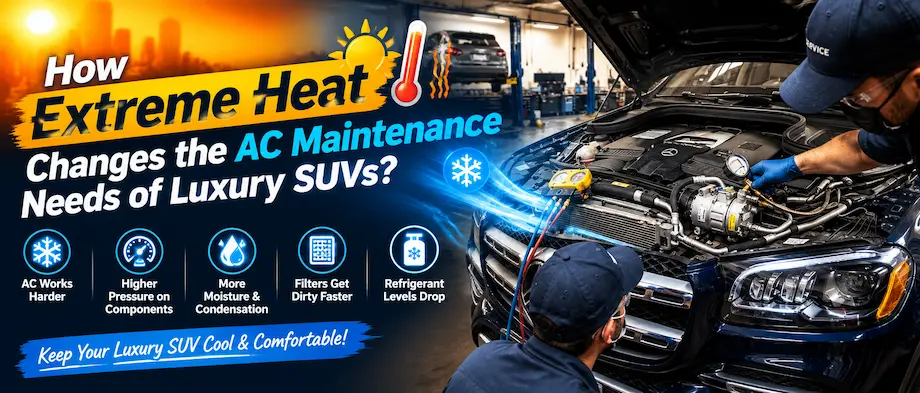
Hot weather can put a lot of pressure on a luxury SUV’s air conditioning system. A system that works well in mild weather may struggle when temperatures rise. Extreme heat makes the compressor work harder, increases the load on the condenser, and can expose weak or damaged AC parts.
Dust, traffic jams, long driving hours, and direct sunlight can add even more stress. Because of these conditions, luxury SUV owners need to pay closer attention to AC maintenance and deal with small cooling problems before they become major faults.
Why Extreme Heat Puts More Stress on an SUV AC System
An AC system has to remove heat from the cabin before it can provide cool air. When the outside temperature is already very high, this process becomes harder.
The compressor may need to run for longer periods, while the condenser has to release more heat into the outside air. A large luxury SUV also has a bigger cabin than a small car, so there is more space to cool.
Regular checks become important because small weaknesses in the system can become noticeable much faster during periods of extreme heat.
1. High Temperatures Increase Compressor Work
The compressor is one of the hardest-working parts of the AC system during hot weather. It moves refrigerant through the system and helps remove heat from the cabin.
When the temperature outside is very high, the compressor may need to operate for longer periods to maintain the selected cabin temperature.
Constant operation can increase wear on the compressor and related parts. If the compressor is already weak, the problem may become more obvious in extreme heat.
Drivers may notice that the AC takes longer to cool the cabin or becomes less effective while the vehicle is sitting in traffic. Regular inspection can help find early signs of compressor trouble.
2. The Condenser Needs Good Airflow
The condenser releases heat from the refrigerant before the cooling process continues. It is usually located near the front of the vehicle, where it can receive airflow. However, dust, dirt, insects, and road debris can collect on its surface and reduce heat transfer.
This becomes more important in very hot weather because the condenser already has to work against a high outside temperature. A dirty condenser may cause cooling performance to drop, especially when the SUV is moving slowly.
During AC maintenance, the condenser should be checked for dirt, damage, and restricted airflow. Keeping this area clean can help the system release heat more effectively.
3. Low Refrigerant Becomes More Noticeable
Refrigerant is needed to move heat out of the cabin. If the system has a leak and the refrigerant level becomes low, cooling performance can suffer. The problem may not be obvious during cooler weather because the AC has less heat to remove.
During extreme heat, however, low refrigerant can become much easier to notice. The AC may blow cool air at first but struggle to maintain the temperature later. Drivers should not simply add refrigerant without checking for leaks.
A proper inspection can find leaks around hoses, seals, fittings, and other parts. Fixing the source is important for reliable cooling.
4. Cabin Filters Can Become a Bigger Concern
A cabin air filter keeps dust and other particles from entering the passenger area through the ventilation system. When the filter becomes dirty, it can restrict airflow and make the blower work harder.
Hot and dusty conditions can cause the filter to become dirty faster, especially when the SUV is driven regularly in busy areas or on dusty roads. Weak airflow can make the cabin feel warm even when the AC is producing cold air.
Drivers should have the filter checked during regular maintenance and replace it when it becomes heavily blocked. A clean filter supports better airflow and helps passengers feel the cooling more quickly.
5. Heavy Traffic Adds Extra AC Load
Luxury SUVs often spend long periods in city traffic. When a vehicle is moving slowly, there is less natural airflow through the front of the AC system. The cooling fans must work harder to help the condenser release heat.
This can be especially demanding when the outside temperature is high, and the SUV is stuck in traffic for a long time. A cooling fan that is weak or not working correctly can cause AC performance to drop while the vehicle is stationary.
Once the SUV starts moving again, the cooling may improve. This type of symptom should be checked because it can point to a fan, electrical, or cooling system problem.
6. Direct Sunlight Makes the Cabin Harder to Cool
Sunlight can heat the dashboard, seats, steering wheel, roof, and other interior surfaces. Large luxury SUVs may also have wide windows and panoramic glass roofs, allowing more sunlight into the cabin.
As a result, the AC has to remove a large amount of heat before the interior reaches a comfortable temperature. Parking in direct sunlight for several hours can make the first few minutes of driving especially uncomfortable.
Using a windshield sunshade and parking in a shaded area when possible can reduce the heat entering the cabin. These simple steps can also reduce the load placed on the AC system.
7. Electrical Parts Can Be Affected by Heat
Modern luxury SUVs use many electrical parts to control their climate systems. Sensors, blower controls, actuator motors, control modules, and wiring all help manage temperature and airflow.
High temperatures can place additional stress on electrical components, especially when the vehicle is parked outside for long periods. A faulty sensor may provide incorrect temperature information, while a weak actuator may fail to move an air door correctly.
These problems can cause uneven cooling or incorrect airflow. If the AC behaves strangely, a proper diagnostic check can help identify whether the problem is mechanical or electrical.
For owners who need professional car AC service in Sharjah, having the system checked before cooling performance drops can help identify heat-related problems early.
8. AC Hoses and Seals Need Regular Inspection
The AC system depends on hoses, pipes, seals, and connections to keep refrigerant inside the system. Heat and age can cause rubber components to become hard, weak, or damaged over time.
A small leak may slowly reduce refrigerant levels without creating an obvious puddle under the vehicle. The first sign may simply be weaker cooling.
If the system continues to operate with low refrigerant, other AC parts may also face additional stress. Regular inspection of hoses, seals, and connections can help identify leaks before they affect the whole system.
9. Blower Motors May Work Harder in Hot Weather
The blower motor pushes air through the vents and into the cabin. During extreme heat, drivers often use higher fan speeds for longer periods to cool the vehicle quickly. This means the blower motor can spend more time operating under heavy use.
A worn blower motor may become noisy, slow down, or provide weak airflow. Sometimes the fan works at one speed but not another.
If the AC produces cold air but very little air reaches the passengers, the blower system should be checked. The issue may also involve the fan control module, electrical connection, or a blocked filter.
How Often Should a Luxury SUV AC Be Checked?
There is no single service interval that works for every luxury SUV. The right schedule depends on the vehicle, climate, driving conditions, and age of the AC system. However, owners who regularly drive in very hot weather should avoid waiting until the AC stops working completely.
A basic AC check can include:
- Checking refrigerant pressure
- Inspecting for refrigerant leaks
- Testing the compressor
- Checking condenser airflow
- Inspecting the cooling fans
- Checking the cabin filter
- Testing blower operation
- Checking sensors and electrical controls
Early checks can make it easier to find small problems before they turn into expensive repairs.
Conclusion
Extreme heat changes how hard a luxury SUV’s AC system has to work. High temperatures place extra demand on the compressor, condenser, cooling fans, blower motor, and other components.
Dust, heavy traffic, direct sunlight, low refrigerant, dirty filters, and aging seals can make cooling problems worse. Regular AC checks are therefore more important in hot climates.
Checking the system before the hottest period and responding quickly to weak cooling can help protect expensive components. With proper maintenance, a luxury SUV can provide stronger and more consistent cabin cooling even in demanding weather.