SUVs are built to handle heavy loads, long drives, and busy roads. When something goes wrong, the first signs can sometimes be confusing, especially when the vehicle starts shaking, losing power, or making strange sounds.
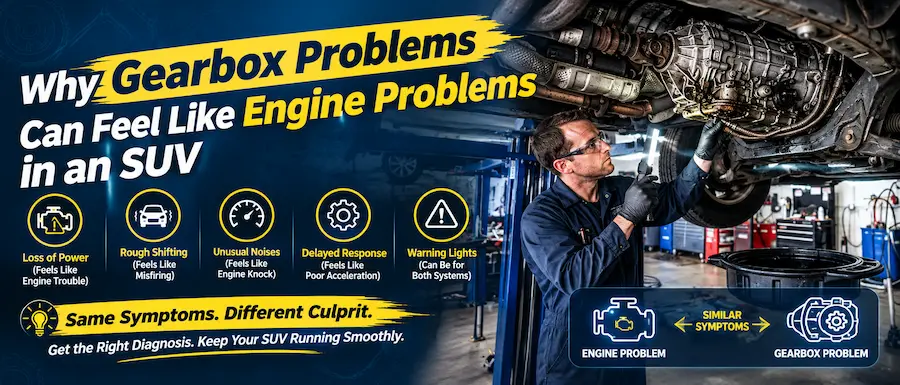
Gearbox problems can feel like engine problems because both systems work closely together to produce smooth movement. A faulty transmission can cause poor acceleration, rough movement, or unusual sounds that seem to come from the engine.
In many cases, the engine may be working well while the gearbox is causing the problem. Knowing the difference can help drivers avoid delays and prevent a small fault from becoming a costly repair.
How Gearbox Problems Can Feel Like Engine Problems?
The gearbox controls how engine power reaches the wheels. When it cannot select or hold the right gear, the SUV may not respond normally when the driver presses the accelerator. This can feel like the engine is weak or struggling.
Drivers may notice slow pickup, sudden jerks, or changes in engine speed. Since these symptoms happen while the engine is running, it is easy to blame the engine first. However, checking the transmission system is also important when an SUV shows these warning signs.
Common Signs That a Gearbox Problem May Feel Like an Engine Problem
1. Slow Acceleration Can Point to a Gearbox Fault
A healthy SUV should increase speed smoothly when the accelerator is pressed. If the gearbox has a problem, the vehicle may take longer to respond. The engine may rev higher, but the SUV does not gain speed at the same rate.
This can make the driver think the engine has lost power. A worn clutch pack, low transmission fluid, or internal transmission fault can cause this feeling. If slow pickup happens often, the vehicle should be checked before the problem affects more transmission parts.
2. Rough Gear Changes Can Feel Like Engine Misfires
A rough gear change can create a strong jerk through the SUV. Some drivers may think the engine is misfiring because the vehicle shakes when power changes. However, the problem may be inside the transmission.
A worn clutch, damaged valve body, or faulty shift solenoid can make gear changes harsh. The engine may still be producing normal power, but that power is not being transferred smoothly.
Paying attention to when the shaking happens can help. If it occurs mainly during gear changes, the gearbox should be inspected.
3. High Engine RPM Does Not Always Mean an Engine Problem
When the engine speed rises, but the SUV does not move faster, the transmission may be slipping. This happens when the gearbox fails to transfer engine power properly to the wheels. The driver may see the RPM needle climb quickly during acceleration.
Yet the vehicle may feel weak or slow. This can be mistaken for an engine issue because the engine sounds louder than normal. Transmission slipping should not be ignored because continued driving can create more heat and wear inside the gearbox.
For drivers who notice these symptoms in the UAE, getting the system checked early can save time and money. A professional service such as gearbox repair in Sharjah can help identify whether the problem is linked to the transmission, its controls, or another drivetrain part.
4. Strange Noises Can Come From the Transmission
SUV drivers may hear whining, humming, clunking, or grinding sounds and assume that the engine is the source. While engine parts can create unusual sounds, the gearbox can also produce them.
Low fluid levels, worn bearings, damaged gears, or other internal faults may cause noise that changes with vehicle speed. The timing of the sound is useful when finding the cause.
If the noise changes when the vehicle shifts gears or moves at different speeds, the transmission should be considered as a possible source.
5. Shaking During Driving May Be Gearbox Related
Shaking is another symptom that can make a transmission fault look like an engine problem. An SUV may shake while moving from a stop, changing gears, or driving at low speed. A worn clutch or torque converter can cause this type of vibration.
In some cases, the engine mounts may also be involved, making diagnosis harder. The driver should note when the shaking starts and whether it happens during acceleration, braking, or gear changes. These details can help a technician find the actual cause faster.
6. Delayed Gear Engagement Can Feel Like Power Loss
A delayed response after selecting Drive or Reverse can be a sign of a transmission problem. The driver may move the gear selector and expect the SUV to move immediately, but there may be a short pause before the vehicle responds.
This delay can happen because of low fluid pressure, worn internal parts, or an issue with the transmission control system. When the gear finally engages, the vehicle may move suddenly. This can feel like the engine is struggling, but the fault may actually be in the gearbox.
7. Warning Lights Can Help Find the Real Problem
Modern SUVs use electronic control units to monitor the engine and transmission. When the system detects an issue, a warning light may appear on the dashboard.
The check engine light can sometimes turn on because transmission faults are also monitored through the vehicle’s computer system. Some SUVs may also show a separate transmission warning.
Reading the stored fault codes can provide useful information. However, a code alone does not always identify the exact failed part. Proper testing is needed before replacing components.
8. Overheated Transmission Fluid Can Change Vehicle Behavior
Transmission fluid helps reduce friction and carries heat away from internal parts. When the fluid becomes too hot, it may lose some of its ability to protect the gearbox. This can lead to delayed shifts, slipping, rough changes, or strange noises.
Large SUVs can place extra stress on the transmission because of their weight and strong engines. Hot weather and heavy traffic can add even more heat. If the vehicle starts behaving differently after long drives or traffic jams, transmission temperature should be considered.
Why Can SUVs Hide Gearbox Problems?
SUVs often have powerful engines and heavy drivetrains, which can make early gearbox problems harder to notice. A strong engine may continue producing enough power to move the vehicle even when the transmission is beginning to wear.
The driver may only notice a small delay, slight vibration, or unusual engine sound at first. Over time, the symptoms can become stronger.
This is why changes in driving feel should not be ignored. Early inspection can help separate normal engine behavior from a developing transmission fault.
Common Transmission Issues Behind These Symptoms
Several gearbox faults can create symptoms that look similar to engine trouble. Low or dirty transmission fluid is one common cause. Worn clutch packs can lead to slipping, while damaged solenoids may cause poor gear selection.
A failing torque converter can create shuddering and delayed engagement. Problems with the valve body can also affect fluid pressure and shifting.
Electronic faults may cause the transmission to select the wrong gear or enter a protective mode. Finding the exact cause requires checking both mechanical and electronic parts.
How to Tell Engine and Gearbox Problems Apart?
Drivers can look at a few simple clues before visiting a workshop. An engine problem may cause rough idling, difficulty starting, unusual exhaust smoke, or poor performance even when the vehicle is stationary.
A gearbox fault is more likely to appear during gear changes, acceleration, or when selecting Drive or Reverse. However, some symptoms overlap.
For example, both systems can cause shaking or poor acceleration. Because of this, guessing the faulty part can lead to unnecessary repairs. A proper inspection is the safest way to confirm the cause.
How Regular Maintenance Protects the Gearbox?
Regular transmission care can reduce the chance of serious problems. The correct fluid should be used according to the vehicle maker’s specifications. Fluid levels should also be checked when required, especially if there are signs of leakage.
Drivers should not ignore delayed shifts, slipping, or new sounds. Heavy towing and frequent stop-and-go driving can put extra stress on the transmission, so service needs may vary by vehicle and driving conditions. Following the correct service schedule can help the gearbox work smoothly for longer.
Conclusion
Gearbox problems can feel like engine problems because the two systems depend on each other to deliver power to the wheels. Slow acceleration, high RPM, shaking, strange noises, and rough movement may come from the transmission rather than the engine.
Paying attention to when the symptoms occur can provide useful clues. Regular fluid checks, timely servicing, and early diagnosis can help prevent bigger failures.
If an SUV begins shifting badly or behaving differently, having the gearbox checked by a qualified technician is a better choice than assuming the engine is at fault.