Ask ten people in Dubai how they found their car and you will hear ten different stories. One picked up a Corolla from a colleague who was leaving the country. Another spent three weekends walking around Al Aweer in July heat. A third paid too much for a shiny SUV and discovered the air conditioning was on its last breath. The city has one of the busiest second hand markets in the region, and that is good news if you know what you are doing and expensive news if you do not.
This guide is written for real buyers: new arrivals who need wheels by next week, families upgrading from a small hatchback, and long-time residents who simply refuse to pay showroom prices. We will look at why used cars in Dubai make sense, the types you will actually see, the steps to buy one properly, and the checks that save you money later.
Why Choose Used Cars in Dubai
A brand new car loses a large slice of its value in the first couple of years. Somebody else has already paid that price, and you get the benefit. A sensible used purchase lets you drive a better model than your budget would allow new, which is the simplest argument in favour of buying second hand. For a general overview of how the wider market works, the used car entry on Wikipedia is a decent starting point.
Dubai adds a few advantages of its own:
- Huge choice. Dealers, open-air markets, online classifieds and private sellers all operate side by side, so you can compare a dozen similar cars in a single weekend.
- Cars built for the climate. Most GCC-spec vehicles come with stronger cooling systems and dust protection, which matters more than people think once summer arrives.
- Short ownership cycles. Many residents change cars when they change jobs or leave the country, so well-kept, low-mileage examples appear regularly.
- Flexible finance. Banks often lend up to around 80 percent of a used car’s value, which means a 20 percent down payment can be enough for eligible buyers.
- Easy paperwork for residents. Once you hold an Emirates ID and a valid UAE licence, the legal side is mostly handled through the RTA.
None of that removes the need for care. It just means the opportunity is real.
Types of Used Cars Available
Dubai’s second hand market is wide enough that you should decide what you need before you start scrolling through listings. Here is how the main categories compare.
| Type | Common examples | Best for | Watch out for |
| Economy sedans and hatchbacks | Toyota Corolla, Nissan Sunny, Hyundai Accent, Kia Picanto | First-time owners, daily commuting, tight budgets | High mileage from taxi or rental history |
| Family SUVs | Toyota Fortuner, Mitsubishi Pajero, Nissan X-Trail, MG ZS | Families, weekend trips, rough roads | Off-road abuse, worn suspension |
| Full-size and off-road SUVs | Nissan Patrol, Toyota Prado, Land Cruiser | Desert driving, strong resale value | High asking prices, hidden accident repairs |
| Pickups | Toyota Hilux, Nissan Navara | Business use, carrying equipment | Heavy commercial use, chassis damage |
| Luxury cars | Mercedes-Benz, BMW, Lexus, Audi | Drivers who want comfort and status for less | Expensive parts and servicing after warranty ends |
| Hybrid and electric | Toyota hybrids, early Chinese and Western EVs | Low running cost, city driving | Battery health and charging access at home |
| Imported (non-GCC) cars | US, Canadian or Japanese spec vehicles | Buyers hunting unusual models or lower prices | Different cooling, harder parts, lower resale value |
GCC spec or imported?
This one trips up a lot of first-time buyers. A GCC-spec car was built for Gulf conditions. An imported car, often from the United States, Canada or Japan, may have been designed for colder weather and a very different road environment. Imported cars can look like a bargain, but they sometimes carry a history you cannot easily trace, and buyers who later try to sell often find the market thinner. If you are not sure which one you are looking at, ask the seller for the original specification and check it against the chassis number.
Dealer, private seller or certified programme?
Dealers charge more but usually offer a short warranty and handle paperwork. Private sellers are cheaper and negotiable, yet you carry all the risk. Certified pre-owned programmes from main agencies sit at the top of the price range and offer the most peace of mind. Pick the route that matches your tolerance for risk, not just your budget.
How to Buy Used Cars Dubai: Step by Step
The process is not complicated, but the order matters. Skipping a step usually costs more than the step itself.
- Set a full budget. Add the car price, RTA transfer charges, insurance, a first service and a cushion for small repairs. A car that looks cheap can become expensive fast if you ignore this.
- Shortlist three to five cars. Use the big classified portals and dealer websites, then compare the same model across different sellers. Price gaps of several thousand dirhams for near-identical cars are common.
- Check the paper trail. Ask for the registration card (Mulkiya), service records and the seller’s Emirates ID. Confirm there are no unpaid fines, Salik balance issues or bank loans against the car.
- Inspect in daylight. Look at panel gaps, paint, tyres, underbody and the engine bay. Switch the air conditioner to full cold and leave it running while you talk with the seller.
- Take a proper test drive. At least twenty minutes, including a stretch of highway. A seller who refuses a test drive is waving a red flag.
- Get an independent inspection. A garage or testing centre can check what you cannot, including computer faults and hidden accident repairs. The fee is small compared with a wrong purchase.
- Negotiate calmly. Use any faults found as leverage. Haggling is normal in Dubai and sellers expect it.
- Sign a written agreement. Record the price, the chassis number, the date and what is included. Pay through a bank transfer or manager’s cheque rather than a pile of cash in a car park.
- Transfer ownership through the RTA. You will need insurance in your name before the transfer goes through. Details are in the next section.
The RTA ownership transfer
The Roads and Transport Authority controls vehicle registration in the emirate, and a sale is not legally finished until the registration card is reissued in your name. Both buyer and seller usually take part. The seller can start the process in the official app or on the RTA website, and the buyer completes payment and testing. Cars older than three years normally need to pass a technical test first.
The buyer should bring an original Emirates ID, a valid UAE driving licence and an insurance certificate in their own name. The seller needs to have cleared all traffic fines and any bank loan. If the car was financed, the bank’s clearance letter is essential.
| Item | Approx. cost (AED) | Notes |
| Ownership transfer fee | 350 | Standard for private light vehicles |
| Knowledge and innovation fee | 20 | Added to most RTA transactions |
| Technical inspection | 110 to 170 | For cars older than three years |
| Short number plate | 35 per plate | Only if you change the plates |
| Insurance | Varies widely | Third-party cover is cheaper, comprehensive protects your own car |
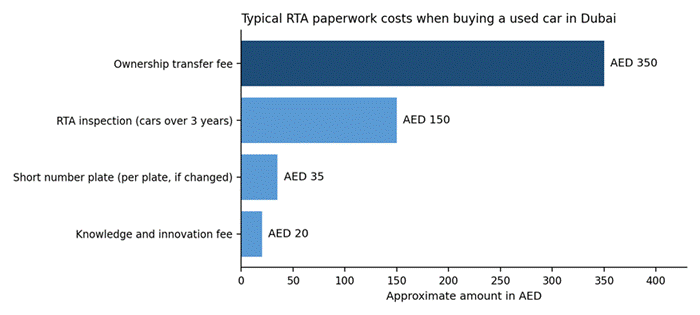
Figures are approximate and can change. Always confirm on the RTA website before you pay.
Where buyers usually go in Dubai
| Area | What you will find | Good to know |
| Al Aweer, Ras Al Khor | Large open used car market with hundreds of sellers | Best visited early in the morning, bring someone who knows cars |
| Sheikh Zayed Road and Al Quoz | Dealer showrooms and luxury pre-owned specialists | Higher prices, usually better documentation |
| Deira and Al Qusais | Independent dealers, mid-range cars | Good for comparing several sellers in one trip |
| Al Barsha and Al Quoz testing centres | RTA-approved vehicle testing and registration services | Book a slot online to avoid long queues |
Important Tips Before Buying a Used Car in Dubai
After the basics, the small details are what separate a good purchase from a painful one. These are the points experienced buyers keep repeating.
Respect the heat
Dubai summers are brutal on batteries, rubber, plastics and cooling systems. Check the battery date, look for cracked hoses and dashboard fading, and make sure the AC blows cold within a minute. A weak compressor is a costly fix.
Be suspicious of a perfect price
If a car is thousands of dirhams cheaper than every similar listing, there is a reason. It might be accident damage, a rolled-back odometer or a problem with the paperwork. Good deals exist, but they rarely look too good to be true.
Look for signs of accident or flood repair
Uneven panel gaps, mismatched paint shades, overspray on rubber seals and damp carpet are classic clues. A paint thickness gauge, available at most testing centres, exposes repainted panels quickly.
Read the service history properly
Agency servicing is a plus, but a stamped book alone proves little. Ask for invoices and compare the dates and mileage. Gaps are not always a dealbreaker, although they should lower the price.
Clear fines, Salik and loans first
Outstanding fines and finance can block the transfer. Ask the seller to settle them before you pay and confirm through the official Dubai Police and RTA channels. Do not accept a verbal promise.
Check the tyres and the small parts
Tyres have a four-digit date code. Anything older than five or six years is a safety concern no matter how much tread is left. Uneven wear can also point to alignment or suspension faults.
Watch out for scams
Avoid sellers who ask for a deposit before you have seen the car, who insist on meeting somewhere odd, or who push a no-test-drive policy. If the name on the registration card does not match the person selling, walk away.
Think about what comes after the purchase
Buying the car is only the first step. Plan your insurance, your mobile plan and, for new arrivals, the rest of your setup. If you have just landed, our guide to Etisalat data plans in the UAE helps you sort the connection side, and our list of second hand furniture shops in Dubai is handy if you are furnishing a new flat on the same sensible budget.
Shipping a car in or out of the country
Some buyers choose to import or export a vehicle instead of buying locally. If that is you, you will end up tracking the shipment through Jebel Ali, and our walkthrough of the Dubai Trade container enquiry explains how the tracking system works and how to avoid storage charges.
Enjoy the car properly
Once the paperwork is done, take the new purchase on a proper drive. A weekend run to the coast near the capital is a good way to test how the car behaves on long roads, and our roundup of fishing spots in Abu Dhabi gives you a few ideas for where to point the bonnet.
Final Thoughts
Buying a used car in Dubai rewards patience. Set a real budget, compare widely, insist on paperwork, inspect the car in the light, and finish the RTA transfer properly. Do those things and you will end up with a car that serves you well for years rather than a story you tell people to warn them. Take your time, bring a friend who knows engines if you can, and never feel rushed by a seller who says another buyer is on the way.
Useful places and contacts
| Place | Details |
| Roads and Transport Authority (RTA), Dubai | Vehicle licensing and ownership transfer. Online at rta.ae or through the Dubai Drive app. |
| Dubai Police | Traffic fines and records. Online at dubaipolice.gov.ae. |
| Al Aweer Used Car Market | Ras Al Khor area, Dubai, United Arab Emirates. |
Frequently Asked Questions
What documents do I need to buy a used car in Dubai?
You need an original Emirates ID, a valid UAE driving licence and an insurance certificate in your own name. The seller provides the registration card and proof that fines and any bank loan have been cleared. The RTA website lists the current requirements.
Can tourists or visitors buy a used car in Dubai?
Registration is generally tied to UAE residency, so visitors usually cannot complete the ownership transfer themselves. Some dealers handle exports for overseas buyers, and you can read about the shipping side in our container enquiry guide.
How much does it cost to transfer a car to my name?
For a standard private car, the main transfer fee is about AED 350, with a small extra fee and, if the car is older than three years, a testing charge. Plate changes cost more. Always confirm the latest amounts on the RTA site.
Is a GCC-spec car really better than an imported one?
For most buyers, yes. GCC-spec cars are built for the local climate and usually hold their value better. Imported cars can be fine, but they need a closer look. The Wikipedia page on used cars explains some of the general risks of buying second hand.
Can I buy a used car with a bank loan?
Yes. Many banks lend against used cars if the vehicle is not too old and you meet income rules. A down payment of around 20 percent is common. If the car you are buying already has a loan, the seller must clear it or the bank must approve the transfer.
How do I check for unpaid fines on a used car?
Use the official channels run by the RTA and Dubai Police to look up fines against the vehicle before you pay. Make the seller clear everything first.
Should I buy from a dealer or a private seller?
A dealer costs more but offers paperwork support and sometimes a warranty. A private seller is cheaper but riskier. If you pick a private sale, pay for an independent inspection.
What is the best time of year to buy?
Many sellers are keen to close deals before summer holidays and at the end of the year when residents relocate. That is often when you can negotiate hardest, but do not rush just because the price looks good.
Related Posts
- Etisalat UAE Data Plans: Daily, Weekly, Monthly and Unlimited Deals
- Best Places to Buy Second Hand Furniture in Dubai
- Dubai Trade Container Enquiry: Complete UAE Tracking Guide
- Best Fishing Spots in Abu Dhabi
Disclaimer
This article is for general information only and is not legal, financial, mechanical or insurance advice. Fees, rules and procedures set by the RTA, Dubai Police, banks and insurers can change without notice, so confirm current details with the relevant authority before you buy or pay. Prices and examples mentioned are approximate. Always inspect a vehicle and verify its documents independently. Arab Market Trends is not responsible for losses arising from reliance on this content.