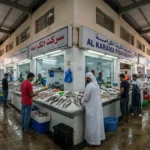
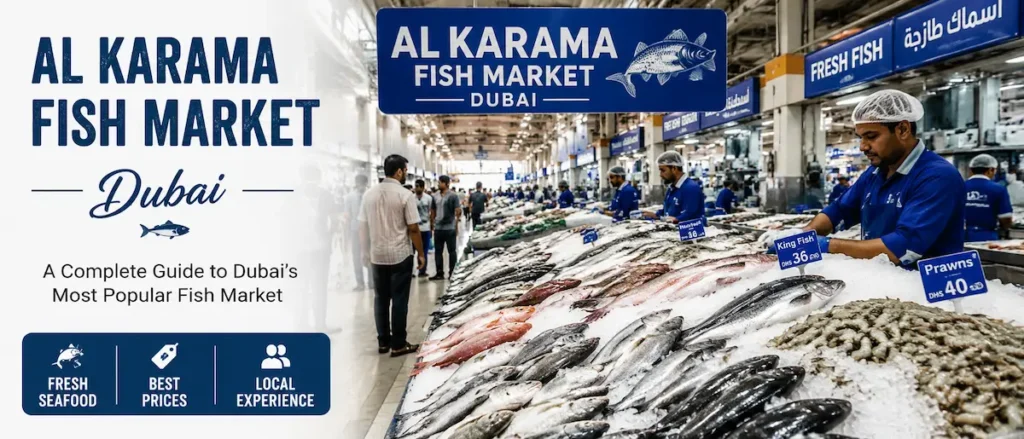
There is a particular kind of energy that hits you the moment you step inside Al Karama Fish Market. The sharp, clean smell of the sea. The rhythmic thud of a cleaver on a wooden block. A vendor calling out prices in three languages at once. Families inspecting prawns with the same seriousness they would give a major purchase. It is, in the truest sense, the living pulse of everyday Dubai — raw, real, and completely removed from the glass towers and designer boutiques that most visitors associate with this city.
Al Karama Fish Market is not a tourist attraction dressed up as a local experience. It is a genuine working market that has served the Karama community for decades, supplying fresh fish, shellfish, meat, and vegetables to households, small restaurants, and home cooks across one of Dubai’s most densely populated and culturally diverse residential neighbourhoods. If you want to understand how Dubai actually eats and shops, this is the place to come.
This guide covers everything you need to know before your visit — the history, the seafood on offer, current prices, how to get there, what to buy, and how to make the most of the experience whether you are a long-time UAE resident or arriving for the first time.
Al Karama Fish Market: Quick Facts at a Glance
| Address | Al Karama, Dubai, United Arab Emirates (68P3+XGJ) |
| Phone | +971 4 334 8974 |
| Opening Hours | 8:00 AM – 10:00 PM, Daily (including weekends & public holidays) |
| Nearest Metro | BurJuman Station (Red & Green Line) |
| What You’ll Find | Fresh fish, shellfish, imported seafood, meat, vegetables, grocery essentials |
| Parking | Available in surrounding Karama area — arrive early for best spots |
| Payment | Cash preferred; some stalls accept card |
| Best Time to Visit | Early morning 7:00 AM – 10:00 AM for peak freshness |
The Story Behind Al Karama Fish Market: A Neighbourhood Built on Trade
Karama as a district has an identity that feels genuinely different from the rest of Dubai. Established in the early days of Dubai’s rapid growth, it was originally designed as an affordable residential area intended to house the growing workforce of the emirate. The name Karama itself translates from Arabic as ‘dignity’ or ‘generosity’ — qualities that still feel embedded in the character of the neighbourhood today.
The fish market grew organically from the needs of this community. Fishing was, for generations, one of the primary occupations of the people living along the Arabian Gulf coastline. Long before Dubai had hypermarkets and refrigerated delivery trucks, fresh fish was the protein of choice for families across the region — caught in the morning and sold the same day at local trading points. Al Karama Fish Market is a direct descendant of that tradition.
What started as a cluster of open stalls serving a small residential area gradually formalized over the decades into an organised indoor market with dedicated fish, meat, and vegetable vendors. The market avoided the fate of many similar souks in Dubai, which were either demolished during development projects or slowly abandoned as modern retail expanded. Karama’s dense, walkable neighbourhood character meant that residents continued to prefer the market over distant supermarkets — and still do.
Today, the market continues to serve the same core community it always has, while drawing visitors from across Dubai who come specifically for the freshness of the catch and the straightforwardness of the pricing. It occupies a quiet but important role in Dubai’s food supply chain, connecting local and regional fishermen with the households and restaurant kitchens that feed the city.
What You Will Find at Al Karama Fish Market: A Full Breakdown
Fresh Local Fish From UAE Waters
The heart of the market is its fresh fish section. The majority of the catch arrives daily, sourced from fishermen working the waters of the Arabian Gulf and the Gulf of Oman. Local species dominate the display counters, laid out on beds of crushed ice and often still glistening from the early morning haul.
Among the local varieties you are likely to find on any given day:
- Hammour (Grouper) — The king of Gulf fish, hammour is prized for its thick white flesh and mild flavour. It holds together well when grilled or baked and is a staple of traditional Emirati cooking.
- Kingfish (Waho / Seer Fish) — Fast-swimming and flavourful, kingfish is enormously popular across the Indian subcontinent and the Gulf alike. It is excellent in curries, on the grill, or marinated and fried.
- Sheri (Emperor Fish) — A beautiful red-orange fish with a sweet, firm flesh. Sheri is considered a premium catch and fetches slightly higher prices accordingly.
- Mackerel (Kanaad) — One of the more affordable everyday fish, mackerel is oily, flavourful, and well-suited to spiced preparations.
- Bayadh and Farsh — Less commonly known outside the Gulf but deeply embedded in local cuisine, these species appear regularly at the market and reward those willing to ask the vendor how to cook them.
- Zubaidi (Pomfret) — A flat, silver fish popular across the Arabian Peninsula and South Asia. Its delicate flavour makes it a favourite for lighter preparations.
Shellfish and Crustaceans
Alongside the whole fish, the market carries a solid selection of shellfish and crustaceans. Prawns and shrimp are consistently available in multiple grades — smaller varieties work well in curries and pasta dishes, while jumbo tiger prawns are ideal for grilling or barbecue. Crabs, lobsters, and mussels also appear on the counters, though availability of more premium shellfish can vary depending on the season and what the morning’s supply brought in.
Imported Seafood
The market does not limit itself to local catches. Imported varieties including Norwegian salmon, tuna, and squid have become regular fixtures on the counters, reflecting both the cosmopolitan character of the Karama community and the broader reality of Dubai’s seafood supply chain. These imports sit alongside the local catch, clearly priced, so shoppers can choose based on preference and budget.
Meat and Vegetables
Beyond fish, the market area encompasses a number of meat and vegetable shops that complete its one-stop-shop character. Fresh chicken, mutton, and beef are available at prices that are typically more competitive than supermarket alternatives. The vegetable stalls stock everyday produce — tomatoes, onions, garlic, chilies, herbs, and seasonal items — often sourced locally or from regional farms.
The combination of fresh seafood, meat, and vegetables in a single location makes Al Karama Fish Market genuinely convenient for families planning a full week of home cooking. There is no need for a separate supermarket visit when the market has the fundamentals covered.
Al Karama Fish Market Price Guide
Prices at the market fluctuate depending on season, daily supply, and the specific vendor. The table below reflects a general pricing range based on current market conditions. Always ask the vendor for the day’s rate before purchasing, and remember that polite negotiation — especially for larger quantities — is entirely normal and expected.
| Category | Item | Price (AED) | Notes |
| Fish | Kingfish (Waho) | 35 – 55 / kg | Local favourite, ideal for grilling |
| Fish | Hammour (Grouper) | 45 – 70 / kg | Premium UAE catch |
| Fish | Mackerel (Kanaad) | 20 – 30 / kg | Budget-friendly everyday choice |
| Fish | Sheri (Emperor) | 40 – 60 / kg | Highly sought after local species |
| Shellfish | Fresh Prawns / Shrimp | 25 – 45 / kg | Local & imported options |
| Shellfish | Crab | 30 – 50 / kg | Varies by size and type |
| Shellfish | Lobster | 80 – 130 / kg | Available on request |
| Imported | Norwegian Salmon | 55 – 75 / kg | Premium imported variety |
| Imported | Tuna | 35 – 55 / kg | Fresh cuts available |
| Meat | Mutton | 35 / kg | Fresh and tender |
| Meat | Beef | 30 / kg | Quality cuts |
| Meat | Chicken (fresh) | 18 / 1.2 kg | Daily fresh stock |
Note: Prices are indicative and subject to change based on season, supply availability, and vendor. Imported species and premium local fish such as Hammour tend to sit at the higher end of their respective ranges.
The Market Experience: What It Actually Feels Like to Shop Here
Walking into Al Karama Fish Market for the first time is a sensory shift from the rest of Dubai. The air conditioning works, but the space has the warm, lived-in feeling of a place that has been doing the same job for a long time. The stalls are compact and closely arranged. The counters are loaded with fish. The vendors are busy but engaged — not the slightly disinterested staff you might encounter at a supermarket seafood counter, but people who genuinely know their product.
What stands out immediately to most visitors is the cleaning and preparation service. In most supermarkets, you buy a fish and take it home to deal with. Here, the vendor does it for you. Ask for your fish to be scaled, gutted, and cleaned, and it will be done in front of you in minutes — often at no additional charge or for a minimal fee. If you want steaks cut from a kingfish or fillets prepared from a hammour, that can be arranged too. This service is especially valued by residents who are comfortable buying fish but less practiced at the preparation.
Bargaining is not mandatory, but it is part of the culture. Vendors generally price their goods fairly and the competition between neighbouring stalls keeps things honest. That said, if you are buying a larger quantity, asking for a better rate is entirely acceptable and often successful. The dynamic is friendly rather than pressured — nobody is going to follow you down the aisle if you walk away.
The multicultural atmosphere of the market is something worth noting. Karama’s community includes significant populations from South Asia, Southeast Asia, the Arab world, and East Africa. This diversity is reflected at the market, where you might hear Malayalam, Tagalog, Urdu, Arabic, and English within a few steps of each other. The vendors understand this and adapt their communication accordingly. If you are unsure about a species, simply describe how you intend to cook it and most vendors will steer you toward the right choice.
How to Get to Al Karama Fish Market
By Metro
The most straightforward public transport route is via the Dubai Metro. Take either the Red Line or the Green Line to BurJuman Station. From BurJuman, the market is accessible by a short taxi ride or a walk of approximately 10 to 15 minutes through the Karama district. Many residents who live in the surrounding apartment blocks simply walk.
By Bus
Several RTA bus routes serve the Karama area. The following bus stops are within easy walking distance of the market:
- Al Karama Bus Station 1 and 2
- Karama, Dubai Municipality Centre Stop
- Sunrise City Supermarket Stop
- Lamcy Plaza Bus Stop
By Car or Taxi
If driving, the market is situated near Lulu Supermarket at the junction of 16B Street and 27B Street in Al Karama. Street parking is available in the surrounding area, though it fills up during morning peak hours and on weekends. Ride-hailing apps such as Uber and Careem operate freely in the area and drop-offs directly in front of the market entrance are generally possible.
By Foot from Nearby Areas
Residents of Oud Metha, Al Mankhool, Za’abeel, and the surrounding Karama apartment buildings frequently walk to the market. The flat, walkable layout of Karama makes this an easy option during cooler months.
Practical Tips for Your Visit to Al Karama Fish Market
Arrive Early for the Best Selection
The freshest fish arrives in the early morning. Vendors begin setting up before 7:00 AM, and the first hour or two after opening consistently offers the widest variety and the most recently landed fish. If you have a specific species in mind — particularly a premium local catch like hammour or sheri — arriving early significantly improves your chances of finding it.
Bring Cash
While some vendors now accept card payments, cash remains the preferred and more reliable method of payment at Al Karama Fish Market. Having a mix of AED 10, 20, and 50 notes makes transactions smoother and avoids any delays.
Ask the Vendor How to Cook It
The vendors at this market deal with the same species day after day and have accumulated a practical knowledge of preparation and cooking that no cookbook matches. If you pick up a fish you have never cooked before, ask. The advice you receive — whether it is a spice combination, a cooking method, or a simple tip on timing — is usually genuinely useful.
Use an Insulated Bag
Dubai’s climate means that fish begins to warm quickly once removed from refrigeration. Bringing an insulated bag or a small cooler with a few ice packs is a simple precaution that protects the quality of your purchase, particularly if you are planning a longer journey home or several more stops before you return.
Plan for Nearby Produce
The vegetable stalls around the market stock fresh produce at very competitive prices. If you are shopping for a full meal, coordinating your fish purchase with a visit to the nearby vegetable sellers and meat shops is efficient and saves a separate supermarket trip.
Go on Weekdays for Fewer Crowds
Friday afternoons and weekends are the busiest times at the market, reflecting the leisure shopping patterns of Karama’s large residential community. Weekday mornings are calmer and more relaxed, with shorter waits at counters and easier access to parking.
Al Karama Fish Market vs Other Fish Markets in Dubai
Dubai has a number of fish markets and fresh seafood outlets, each with its own character and clientele. Understanding where Al Karama Fish Market sits in this landscape helps you decide when it is the right choice for your needs.
The Dubai Waterfront Market in Deira is the largest fish trading hub in the emirate, handling hundreds of tonnes of seafood daily. It operates on a wholesale and retail basis with a live fish auction, over 500 seafood vendors, and a significant portion of the city’s restaurant supply passing through its halls. For sheer scale and variety of species, it is unmatched. However, the Waterfront Market can feel overwhelming for casual household shoppers, and the experience is distinctly commercial in character.
Al Hamriya Fish Market in Deira offers a similar traditional souk atmosphere, with good variety and competitive pricing. It is popular with experienced seafood buyers who know exactly what they want and how to navigate a busy market environment.
Al Karama Fish Market occupies a different space in this landscape. It is neighbourhood-scale rather than city-scale. The variety is solid rather than exhaustive. But for everyday household shopping in a friendly, accessible environment with reasonable prices and the added convenience of meat and vegetable vendors nearby, it is consistently reliable. Residents of Karama and the surrounding areas return to it week after week precisely because it is manageable, honest, and close to home.
The bottom line: If you want the most comprehensive selection in Dubai, go to the Waterfront Market. If you want a practical, no-nonsense neighbourhood fish market with fair prices and genuine character, Al Karama Fish Market is the better choice.
The Role of Al Karama Fish Market in UAE Food Culture
Seafood has been central to life along the Arabian Gulf coastline long before the UAE existed as a nation. Fishing communities dotted the shoreline for centuries, sustaining themselves and trading their catches with merchants and travellers passing through. The pearl diving industry that once defined life in what is now Dubai depended on the sea not just for its primary export, but for the food that kept the divers alive and working.
This deep connection to seafood runs through Emirati cuisine in ways that are visible even today. Traditional dishes such as machboos samak — a spiced rice dish made with whole fish — and harees, the wheat and meat porridge that appears at celebrations and during Ramadan, reflect a culinary tradition that valued whatever was fresh and available rather than imported or processed.
The fish market, in this context, is not simply a retail outlet. It is a point of continuity between the fishing traditions of the past and the daily cooking of the present. When a family stops at Al Karama Fish Market to pick up a fresh hammour for dinner, they are participating in a practice that stretches back generations — even if the surrounding neighbourhood looks nothing like it did when those traditions were forming.
The diversity of the Karama community adds another layer to this story. South Asian, Southeast Asian, Arab, and East African families all have their own seafood traditions that they practice in Dubai kitchens. The market reflects this variety in the species it stocks and the preparations it accommodates. A Filipino household might pick up bangus — milkfish — or tilapia. A Keralite family might focus on mackerel or seer fish for a curry. An Emirati household might prioritise hammour or zubaidi for a traditional preparation. All of them find what they need at Al Karama Fish Market.
Nearby Attractions Worth Combining With Your Visit
Karama Park
A well-maintained community park immediately adjacent to the market area, Karama Park is a pleasant spot to sit with a cup of tea after shopping. The park has cricket and badminton areas, shaded walking paths, and a relaxed neighbourhood atmosphere.
Dubai Frame
A short drive from the market, the Dubai Frame is a striking 150-metre high landmark in Zabeel Park that provides panoramic views of both old and new Dubai. It is worth combining with a market visit if you have time to explore the wider neighbourhood.
Zabeel Park
One of Dubai’s largest and most enjoyable parks, Zabeel Park is home to the Dubai Frame and offers extensive space for walking, cycling, and outdoor relaxation. It is a genuine urban escape within easy reach of the market.
Al Seef Waterfront
A reconstructed heritage promenade along the Dubai Creek, Al Seef blends old-Dubai architecture with modern cafes and restaurants. It is about a 10-minute drive from the market and makes for a pleasant extended outing.
Final Thoughts: Why Al Karama Fish Market Still Matters in Modern Dubai
Dubai is a city that is constantly in conversation with its own transformation. New towers, new malls, new dining concepts — the pace of change is relentless and deliberate. Against this backdrop, places like Al Karama Fish Market carry a particular weight. They are not preserved as heritage attractions. They have not been reimagined as ‘authentic experiences’ for tourists. They simply continue to do what they have always done — supply fresh food to a community that depends on them.
The market’s resilience says something important about Karama itself. In a city where older commercial areas are frequently replaced by newer developments, Karama has retained its character as a working neighbourhood with a genuine community life. The fish market is part of that identity.
For residents, it offers practical value — good fish at fair prices, convenient location, and the kind of personal service that a hypermarket seafood counter cannot replicate. For visitors, it offers something rarer in Dubai: an unfiltered look at how the city actually functions at street level, beyond the curated experiences of hotel lobbies and tourist trails.
If you have been to Dubai before and have only seen it from the air-conditioned comfort of malls and restaurants, a morning at Al Karama Fish Market is worth your time. Come early. Bring cash. Ask about the hammour. Let the vendor recommend something you have never tried before. That, more than almost anything else you will do in Dubai, will give you a genuine sense of the place.
Frequently Asked Questions: Al Karama Fish Market Dubai
| Question | Answer |
| What are the opening hours of Al Karama Fish Market? | The market is open daily from 8:00 AM to 10:00 PM, seven days a week including weekends and public holidays. |
| Where exactly is Al Karama Fish Market located? | It is situated in the Karama district of Dubai, UAE, at 68P3+XGJ Al Karama, near Lulu Supermarket at the junction of 16B Street and 27B Street. |
| How do I get to Al Karama Fish Market by metro? | The nearest metro station is BurJuman Metro Station on the Red and Green Lines. From there, a short taxi or walk will bring you to the market. |
| Can I bargain at Al Karama Fish Market? | Yes, bargaining is part of the market culture. Vendors are generally open to negotiation, especially for bulk purchases or repeat customers. |
| Do vendors at Al Karama Fish Market clean and fillet the fish? | Yes, most vendors offer free or low-cost cleaning, scaling, and filleting services on the spot, which is a big convenience for shoppers. |
| What types of fish are available at Al Karama Fish Market? | You can find local UAE species like Hammour, Kingfish, Sheri, and Mackerel, alongside imported varieties such as Norwegian Salmon, Tuna, and Squid. Shellfish including prawns, crabs, and lobster are also available. |
| Is parking available near Al Karama Fish Market? | Yes, there is parking in the surrounding Karama area. Arriving early in the morning is recommended as spaces fill up quickly during peak hours. |
| Are meat and vegetables also sold at Al Karama Fish Market? | Yes. Beyond seafood, the market and its surroundings have stalls selling fresh vegetables, mutton, beef, and chicken at competitive prices, making it a one-stop grocery destination. |
| What is the best time to visit Al Karama Fish Market? | Early morning between 7:00 AM and 10:00 AM is ideal for the freshest catch and the best selection. Late evenings can also offer deals as vendors clear remaining stock. |
| Does Al Karama Fish Market offer home delivery? | Some vendors within the market provide home delivery services for an additional charge. It is advisable to confirm directly with the individual stall or shop owner. |
Related Reading from Arab Market Trends
Read more: UAE Food Market Trends and Consumer Insights
Read more: Dubai Business & Trade: What You Need to Know in the UAE