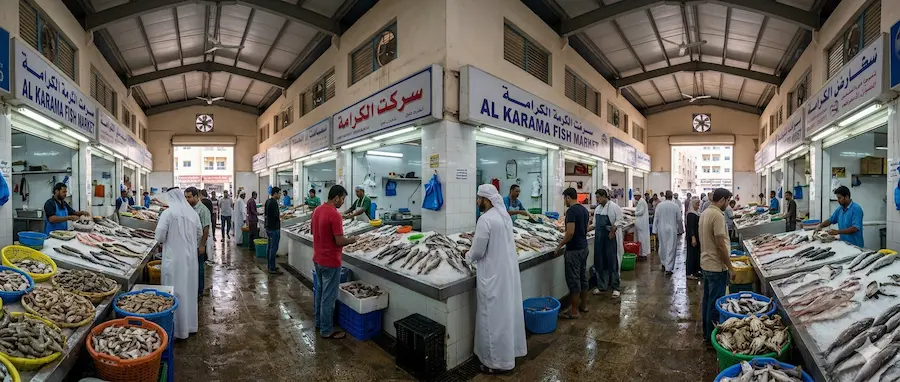
Dubai’s seafood tradition has a very old Arabian Gulf connection. The Gulf seafood, especially, grilled hammour or prawns, is part of an important aspect of daily life all over the Emirates. Al Karama Fish Market is a seafood spot of choice for UAE’s residents and visitors. It is a fine bargain for seafood, even, for many restaurant owners and professional chefs who arrive at that market.
As part of the multi-ethnic market area of Dubai, an aquarium of sorts, Al Karama Fish Market is a seafood shopping experience. Considered still, though, in the old Gulf market tradition, the market presents an excellent lack of local and South Asian seafood products. The latter include seafood from the Gulf, otherwise, Oman, India, Pakistan, and Sri Lanka, East Africa.
This guide covers everything you need to know about Al Karama Fish Market in 2026, including:
- Market overview
- Seafood varieties
- Price tables
- Best shopping times
- Local buying tips
- Cleaning services
- Bargaining culture
- Seafood demand in the UAE
- Restaurant connections
- FAQs
- SEO-rich insights for Middle East audiences
Introduction to Al Karama Fish Market
Al Karama is one of Dubai’s oldest residential and commercial areas. Known for affordable shopping, traditional restaurants, and multicultural communities, Karama has evolved into a popular destination for authentic food experiences.
The fish market in this area serves:
- Local Emirati families
- South Asian communities
- Arabic restaurants
- Catering businesses
- Seafood traders
- Hotel kitchens
Unlike luxury supermarkets in Dubai malls, Al Karama Fish Market offers a more traditional Middle Eastern seafood buying experience where freshness matters more than branding.
Why Al Karama Fish Market Is Popular in Dubai
1. Fresh Daily Seafood Arrivals
Seafood arrives early in the morning from:
- Arabian Gulf waters
- Oman coast
- Fujairah fishing ports
- Sharjah seafood suppliers
- International imports
Most sellers display seafood on ice to maintain freshness throughout the day.
2. Affordable Prices Compared to Supermarkets
Many Dubai residents prefer local fish markets because prices are often lower than premium retail chains.
Example:
| Seafood Type | Market Price (AED/KG) | Supermarket Price (AED/KG) |
|---|---|---|
| Hammour | 38–55 | 60–85 |
| King Fish | 30–45 | 50–70 |
| Sardines | 10–18 | 20–30 |
| Prawns | 35–70 | 60–110 |
| Crabs | 25–55 | 45–90 |
Prices change depending on:
- Fishing season
- Import costs
- Weather conditions
- Demand during Ramadan and Eid
3. Diverse Seafood Selection
Al Karama Fish Market reflects Dubai’s multicultural population.
Buyers can commonly find:
| Local Arabic Name | English Name | Popular Use |
|---|---|---|
| Hammour | Grouper | Grilling |
| Safi | Rabbitfish | Fried fish |
| Sheri | Emperor Fish | BBQ |
| Kanaad | King Fish | Curry |
| Zubaidi | Pomfret | Gulf cuisine |
| Rubyan | Prawns | Mixed seafood |
| Qabqab | Crab | Arabic dishes |
Seafood Culture in the UAE
Seafood has always been central to Emirati culture long before oil transformed the UAE economy.
Traditional Gulf communities depended on:
- Fishing
- Pearl diving
- Maritime trade
Today, seafood remains essential during:
- Ramadan gatherings
- Eid celebrations
- Family dinners
- Beach BBQ events
- Hotel buffets
Popular Emirati seafood dishes include:
| Dish | Description |
|---|---|
| Samak Mashwi | Grilled fish |
| Machboos Samak | Spiced rice with fish |
| Jesheed | Shredded shark dish |
| Shrimp Majboos | Rice with prawns |
| Fried Safi | Traditional crispy fish |
Best Time to Visit Al Karama Fish Market
Timing matters when buying seafood in Dubai.
| Time | Experience |
|---|---|
| 5:00 AM – 8:00 AM | Freshest arrivals |
| 8:00 AM – 11:00 AM | Best variety |
| Afternoon | Lower crowds |
| Evening | Discount opportunities |
Local chefs often arrive early morning to select premium-quality fish.
How to Choose Fresh Fish Like a Local
Middle Eastern seafood buyers usually inspect fish carefully before purchasing.
Key Signs of Fresh Seafood
| Feature | Fresh Fish Indicator |
|---|---|
| Eyes | Clear and bright |
| Gills | Deep red |
| Smell | Ocean-like, not strong |
| Skin | Shiny and moist |
| Flesh | Firm texture |
Avoid fish with:
- Cloudy eyes
- Soft flesh
- Sour smell
- Dry skin
Cleaning and Cutting Services
One reason Dubai fish markets remain popular is the availability of instant seafood preparation services.
Most vendors offer:
- Scaling
- Gutting
- Filleting
- Steak cutting
- Shrimp cleaning
Average cleaning charges:
| Service | Cost |
|---|---|
| Basic Cleaning | AED 5–10 |
| Fillet Cutting | AED 10–20 |
| Large Fish Processing | AED 20–40 |
Seafood Prices in Dubai 2026
Below is an estimated seafood price guide based on UAE market trends.
| Seafood | Average Price (AED/KG) |
|---|---|
| Hammour | 40–60 |
| King Fish | 28–50 |
| Tuna | 35–65 |
| Salmon | 55–90 |
| Prawns | 35–80 |
| Lobster | 120–220 |
| Crab | 30–70 |
| Sardines | 10–18 |
| Pomfret | 40–85 |
Imported seafood prices are generally higher.
Ramadan Seafood Demand in Dubai
Seafood demand rises sharply during Ramadan.
Families often prepare:
- Seafood biryani
- Fried fish platters
- Grilled prawns
- Seafood soups
Popular Ramadan seafood products:
- Jumbo prawns
- King fish steaks
- Hammour fillets
- Lobster tails
Prices may increase 15–30% during peak periods.
Seafood Imports in the UAE
Dubai imports seafood from several countries.
| Country | Popular Imports |
|---|---|
| Oman | King fish |
| India | Prawns |
| Pakistan | Pomfret |
| Norway | Salmon |
| Sri Lanka | Tuna |
| Yemen | Grouper |
Dubai’s logistics system helps maintain seafood freshness through cold-chain transportation.
Why Restaurants Buy from Local Fish Markets
Many Arabic and Indian restaurants in Dubai prefer fish markets over packaged suppliers.
Reasons include:
- Better freshness
- Negotiable pricing
- Custom cuts
- Daily availability
- Seasonal seafood access
Popular seafood restaurants often source fish directly every morning.
Traditional Bargaining Culture
Bargaining remains common in many Middle Eastern markets.
Tips:
- Buy in bulk
- Visit during closing hours
- Compare multiple stalls
- Speak politely
- Build relationships with sellers
Repeat customers often receive better pricing.
Hygiene Standards in Dubai Fish Markets
Dubai Municipality maintains strict food safety regulations.
Vendors must follow:
- Temperature controls
- Ice storage requirements
- Sanitation standards
- Licensing rules
Buyers should still:
- Carry insulated bags
- Refrigerate seafood quickly
- Avoid prolonged outdoor exposure
Al Karama vs Other Dubai Fish Markets
| Market | Specialty |
|---|---|
| Al Karama Fish Market | Community seafood shopping |
| Deira Waterfront Market | Large wholesale selection |
| Jumeirah Fish Shops | Premium seafood |
| Waterfront Market Dubai | Tourist-friendly seafood |
Al Karama is preferred for affordability and neighborhood convenience.
Seafood Buying Tips for Tourists
Visitors to Dubai often enjoy exploring local seafood markets.
Recommendations:
- Visit in the morning
- Wear comfortable clothes
- Carry cash and card
- Ask for cooking suggestions
- Try local Gulf fish varieties
Many tourists combine seafood shopping with nearby Arabic restaurants.
Sustainability and Responsible Fishing
The UAE increasingly promotes sustainable fishing.
Concerns include:
- Overfishing
- Climate impact
- Coral reef damage
Responsible buyers can:
- Avoid undersized fish
- Buy seasonal seafood
- Support regulated fisheries
Seafood and Dubai’s Tourism Economy
Dubai’s food tourism sector continues growing rapidly.
Seafood contributes significantly through:
- Luxury dining
- Traditional Emirati cuisine
- Hotel buffets
- Marina restaurants
- Cruise tourism
Fresh Gulf seafood remains a major attraction for international visitors.
Popular Seafood Cooking Styles in the Middle East
Grilled Seafood
Common across Gulf countries:
- Hammour
- King fish
- Shrimp skewers
Fried Fish
Popular among:
- Emirati households
- Indian expatriates
- Pakistani families
Seafood Rice Dishes
Middle Eastern rice dishes often combine:
- Spices
- Saffron
- Dried lemon
- Seafood broth
Benefits of Eating Fresh Seafood
| Nutrient | Benefit |
|---|---|
| Omega-3 | Heart health |
| Protein | Muscle growth |
| Vitamin D | Bone health |
| Zinc | Immunity |
| Iron | Energy support |
Fresh seafood is considered healthier than heavily processed frozen products.
The Future of Seafood Markets in Dubai
Dubai’s seafood industry continues modernizing with:
- Digital pricing systems
- Online seafood delivery
- Sustainable fishing initiatives
- Cold-chain improvements
However, traditional fish markets like Al Karama remain culturally important.
Frequently Asked Questions (FAQs)
What is the address of Al Karama Fish Market?
You can find it in the Karama community in Dubai, UAE, where residential and shopping areas thrive to serve local and expatriate communities.
What kind of fish are people in Dubai eating?
Seafood preference in Dubai includes:
Hammour
King fish
Pomfret
Prawns
Tuna
Crab
Is fish from local markets more affordable?
Yes. Fishing markets are cheaper than supermarket prices because they get their stock from distributors and fishing ports.
When is the best time to go and buy fish in Dubai?
It’s best to come early in the morning.
Can Dubai tourists enter fish markets?
Yes. Fish markets in Dubai are open to tourists and are an integral part of Dubai’s local food.
Are fish markets in Dubai allowed to operate?
Yes. Dubai’s fish markets are permitted to operate following strict hygiene and seafood handling and safety regulations from Dubai Municipality.
What happens after you buy a fish?
Fish sellers undergo cleaning and cutting for a small fee.
What types of fish are associated with the UAE?
Hammour is considered to be one of the famous and most eaten fish.
Why is fresh fish popular with Gulf citizens?
Seafood is an integral part of the cuisine of the Gulf’s citizens and is preferred to other areas of the Gulf’s seafood.
Are people more interested in fish shopping in Ramadan?
Yes. During the Ramadan and Eid periods, the Gulf’s citizens have a verified increased demand for seafood.
Final Thoughts
Al Karama Fish Market is one of Dubai’s most authentic seafood markets, being part of Gulf traditions and Dubai’s multicultural food culture. With a mix of seafood, from casual preserved and frozen seafood to fresh hammour and prawns, it celebrates and showcases the diversity in culinary practices of the UAE.
For the residents, it caters to fish shopping needs, while for the tourists it is one of the very few destinations to showcase Dubai’s culture outside of the luxury malls and the skyline of the Emirates. To those who value Middle Eastern food, it is a seafood market where traditions are the base of Dubai’s thriving culture.
From premium Gulf fish to reasonably priced seafood, to those who are in search of an authentic Arabic market experience, Al Karama Fish Market remains a vital destination in Dubai’s seafood industry in 2026.
Read Also: Sonapur Dubai