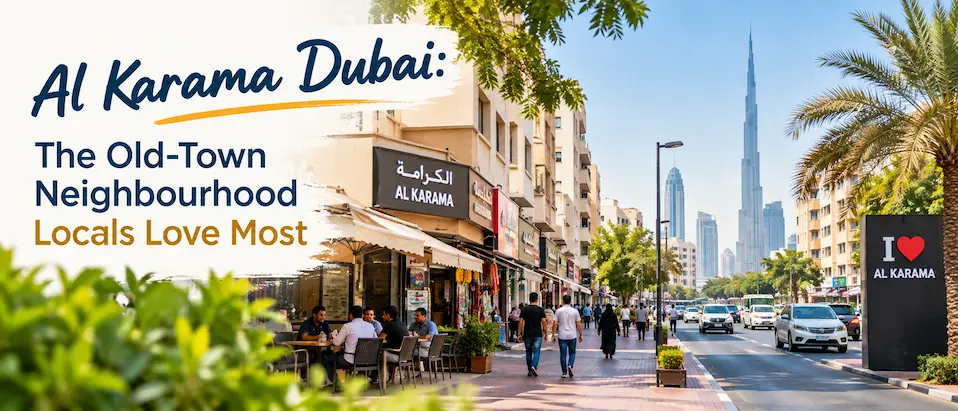
Ask anyone who has lived in Dubai for a few years where to find a decent plate of biryani at midnight, a tailor who can fix a zip while you wait, or a shop that will sell you sensible sandals without a mall price tag, and the same name keeps coming up. Karama. The word means dignity in Arabic, and the neighbourhood wears it quietly. There are no record-breaking towers here and no velvet ropes. What you get instead is a tight grid of low-rise buildings, a great many shopfronts, and a mix of people who have made this corner of Bur Dubai feel like a small town inside a very large city.
This guide covers what Al Karama is, how to reach it, where to eat and shop, what to look at, and what living here is really like. It sticks to practical detail rather than brochure language, so you can plan a half day or a full weekend without guessing.
Al Karama Dubai: At a Glance
| Location | Bur Dubai, on the western bank of Dubai Creek |
| Size | Roughly 1.5 to 2 square kilometres, one of the most densely populated communities in the city |
| Name meaning | Karama is Arabic for dignity |
| Best known for | Independent fashion and accessory shops, the Karama Fish Market, budget restaurants and colourful street murals |
| Street art | Large murals by Malaysian artists on shopfronts along 18B Street |
| Restaurants | Low-key South Asian restaurants, especially on the roads north of Kuwait Street |
| Green space | Compact Karama Park, where residents play cricket and badminton, plus Zabeel Park nearby |
| Getting there | ADCB and BurJuman metro stations, plus several bus routes |
| Best time to go | Mornings for the fish market, late afternoon and evening for food, shopping and walking |
| Good for | Budget travellers, food lovers, photographers, families and long-term residents |
What Al Karama Is, and Why People Care About It
Al Karama sits on the western bank of Dubai Creek, in Bur Dubai. It runs about two kilometres from the diplomatic area of Umm Hurair in the north down to Zabeel Park in the south, and its western edge follows Sheikh Khalifa Bin Zayed Street, where BurJuman Mall stands. The Wikipedia entry for Al Karama puts the area at around 1.5 square kilometres with roughly 75,000 residents, which explains why almost every block feels busy.
Those numbers shape everything else. With so many people in a small footprint, daily needs are met within a few minutes on foot: a grocer, a pharmacy, a laundry, a cafeteria pouring karak chai. Shops stay open late because customers keep turning up. The district was laid out on a strict grid, so getting properly lost is hard, and the low-rise apartment blocks let daylight reach the pavement, something you rarely get in Dubai’s newer districts.
Karama has grown a few recognisable pockets of its own too. Sheikh Hamdan Colony, Karama Centre and the Wasl Hub area each have a slightly different feel, from family housing to dense retail.
A Neighbourhood Built for Everyday Life
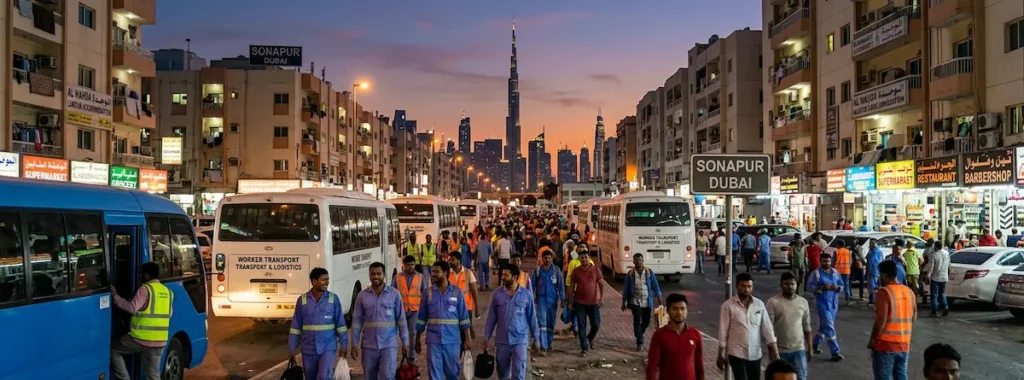
Karama was planned as housing for the workforce that helped Dubai grow, and much of that workforce came from South Asia. The origin still shows. Indian, Pakistani, Bangladeshi, Filipino and Sri Lankan families live here alongside Arab residents, and the street language can change from one shopfront to the next. You might hear Malayalam at the bakery, Urdu at the barber, Tagalog at the remittance counter and Arabic at the corner grocery, all within a single street.
That mix, more than any single landmark, is what people mean when they call Karama a cultural hub. It is not staged for visitors. It is simply how the neighbourhood lives, and visitors are welcome to look in.
Location and Getting Around
Karama is one of the easiest parts of Dubai to reach without a car. ADCB metro station drops you at the edge of the district, BurJuman is a short walk from its western boundary, and bus routes 28, 29, 33, 44, 83 and 88 serve the area, according to Time Out Dubai’s neighbourhood guide. You will need a card to tap in and out, so read our breakdown of Nol Card types, prices and how to get one before you travel.
By road, the position is just as handy. The table below shows approximate drive times from the middle of Karama to the places most visitors want to reach.
| Destination | Approx. drive time | Why go there |
| Zabeel Park | 2 minutes | Green space and Dubai Frame |
| BurJuman Mall | 3 minutes | Shopping and metro interchange |
| Sheikh Zayed Road | 5 minutes | Access to Downtown and the coast |
| Dubai Creek | 10 minutes | Abra rides and old Dubai |
| Dubai World Trade Centre | 10 minutes | Events and offices |
| Dubai International Airport | 15 minutes | Flights, without a long transfer |
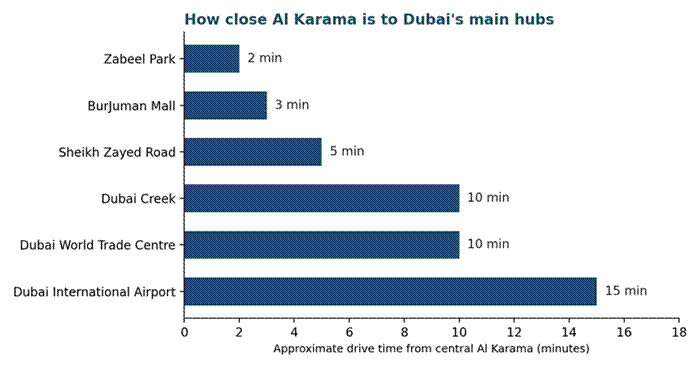
Approximate drive times from central Al Karama. Evening traffic can stretch every figure.
Shopping in Al Karama: Independent Stores and Honest Bargains
Karama is best known for independent fashion and accessory shops rather than global chains. Karama Centre alone spreads across several buildings and holds more than 300 stores selling clothing, handbags, sportswear and plenty more. Nearby, the souvenir stalls attract visitors who want scarves, magnets and small gifts without an airport markup.
A few habits make shopping here easier:
- Compare before you buy. The same item can carry different prices within one block, so check two or three counters first.
- Bargain politely. It is normal here, and it works better when you are buying several things than one small item.
- Ask about returns. Confirm the policy before paying and keep the receipt.
- Skip the fakes. Parts of Karama have long had a reputation for imitation branded goods. Buying counterfeits is illegal in the UAE, so stick to genuine products or clearly unbranded items.
Everyday services are easy to find as well. Tailoring, alterations and phone repairs are usually a short walk from wherever you are standing, and that convenience is a big part of why residents stay.
The Karama Fish Market
If you only have one morning, spend it at the fish market. It is an indoor market with a wide choice of fresh fish and shellfish, and stalls selling meat, fruit and vegetables sit close by. Hammour, king fish, pomfret, prawns and tuna are among the species commonly on offer, and many buyers ask the vendor to clean and cut the catch on the spot.
Go early, bring some cash, and do not be shy about asking the price before the fish is weighed. Our full guide to the Al Karama Fish Market covers timings, buying tips and what to look for when choosing fresh fish.
Where to Eat in Karama
Food is the strongest argument for visiting. The roads north of Kuwait Street are home to low-key South Asian restaurants where plastic chairs, steel plates and generous portions are the norm, and the wider district adds Ethiopian, Indonesian and seafood kitchens to the mix. Here is a starting list of places that come up again and again in local guides.
| Restaurant | Cuisine | Known for |
| Calicut Paragon | Kerala | Seafood biryani and fish dishes |
| Ravi Restaurant | Pakistani | Rich curries and grilled meats |
| Karachi Darbar | Pakistani | Comfort food at family tables |
| Peshwa | Maharashtrian | Hearty vegetarian thalis |
| Zagol | Ethiopian | Shared platters eaten with injera |
| Sallet Al Sayad | Seafood | Freshly cooked Gulf fish |
| Betawi Cafe | Indonesian | Home-style dishes from Jakarta |
| Project Chaiwala | Tea and snacks | Karak chai and quick bites |
Menus and opening hours change, so check before you make a special trip. If Karama has you craving more, our lists of the best South Indian restaurants in Dubai and the best Nepali restaurants in Dubai point you to more kitchens across Bur Dubai and beyond.
Street Art on 18B Street
18B Street has turned into the neighbourhood’s open-air gallery. Huge, colourful murals by Malaysian artists cover shopfronts along the road, and they lift an ordinary retail strip into something worth a slow walk with a camera. Time Out Dubai also points visitors to Karama Souk on the same street, so art and shopping sit side by side.
Visit in daylight when the colours are strongest, and remember these are working shops. Ask before photographing owners or staff, and avoid blocking doorways while you line up a shot.
Karama Park and Zabeel Park
Karama Park is compact, but it is where the community plays. Expats gather for cricket and badminton, and the evenings are when the space really fills up. It is a good spot to sit for twenty minutes and watch how the neighbourhood spends its downtime.
Zabeel Park, on the southern edge, offers more room. It has a 2.5 kilometre jogging track, a boating lake, a skate park and children’s play areas, and Dubai Frame stands within the grounds. From here the skyline of newer Dubai looks close enough to touch, which makes an interesting contrast with the low-rise streets you just left. The park also sits on the same side of Dubai Creek as the rest of old Dubai, so a wider walking day is easy to plan.
The Community Spirit Behind the Streets
Landmarks explain less about Karama than routines do. Shop owners often recognise their regular customers. Cafeterias fill up when shifts end. Friends meet at the same corner for tea, and families shop for the week on the same street they have used for years. None of this is dramatic, and that is exactly the point.
It also explains the name. Dignity, in this setting, means a place where ordinary people can live, work and eat well without needing a big budget. Dubai has plenty of glamorous districts. Karama is one of the few that treats affordability as a strength rather than an apology.
Living in Karama: The Honest Pros and Cons
Apartments here run from studios to three-bedroom layouts, and the district is popular with professionals, singles and small families who want a central address without a waterfront price tag. Rents tend to sit below newer areas, but they change often, so check current listings rather than trusting any single figure. Here is how the trade-offs usually look.
| Advantages | Drawbacks |
| Central position with quick access to major roads | Parking is tight and traffic builds at peak hours |
| Metro and bus links within easy reach | Older buildings vary in quality, so inspect before you sign |
| Groceries, services and restaurants within walking distance | High density means noise and crowded pavements |
| Lower cost of living than many newer districts | Fewer luxury amenities such as pools and gyms in many buildings |
| Strong sense of neighbourhood and daily routine | Very little of the polished, resort-style feel of newer areas |
If you are trying to stretch a monthly budget in the city, our overview of the Fazaa Card in the UAE explains one way eligible residents can cut everyday costs.
A Simple One-Day Plan
| Time | What to do | Why it works |
| Early morning | Fish market, then breakfast at a cafeteria | Freshest stock and cooler air |
| Late morning | Walk the murals on 18B Street | Best light for photos |
| Midday | Browse Karama Centre or the souvenir stalls | Air-conditioned shopping during the heat |
| Late afternoon | Stroll through Zabeel Park and see Dubai Frame | Space to slow down |
| Evening | Dinner at a Kerala, Pakistani or Ethiopian restaurant | Karama at its liveliest |
| Night | Karak chai and a look at Karama Park | Ends the day the way locals do |
Practical Tips Before You Go
- Visit early or after sunset in the warmer months. Midday heat in Dubai is hard on walking plans.
- Carry some cash and a card. Small shops and market stalls may prefer one or the other.
- Wear comfortable shoes. Karama rewards people who walk.
- Use the metro when you can. Parking near busy streets is limited.
- Dress respectfully and ask before taking photos of people.
- Confirm restaurant and market hours on the day, because they can change.
Final Thoughts
Al Karama will never compete with Downtown for spectacle, and it does not try to. Its appeal is closer to the ground: a fish counter in the morning, a mural on the way to lunch, a plate of biryani that costs less than a mall coffee, and a park where somebody is always up for a game of cricket. For visitors, it is a chance to see how Dubai actually lives. For residents, it is home in the plainest and best sense of the word.
Give it a full day, come hungry, and let the neighbourhood set the pace.
Frequently Asked Questions About Al Karama
What is Al Karama known for?
Al Karama is known for independent fashion and accessory shops, the fish market, affordable South Asian and international restaurants, and the murals along 18B Street. Its multicultural community is the thread that ties all of it together.
Where is Al Karama located in Dubai?
It sits in Bur Dubai on the western bank of Dubai Creek, between Umm Hurair in the north and Zabeel Park in the south. You can read the area overview on Wikipedia, and our explainer on where Dubai sits on the map helps if you are new to the city.
How do I get to Al Karama by metro?
Use ADCB station or BurJuman station and walk in. Buses 28, 29, 33, 44, 83 and 88 also serve the area. Load a card first, and see our Nol Card guide for the options.
When is the best time to visit the Karama Fish Market?
Mornings are best, when the choice is widest. Our Karama Fish Market guide covers timings, common fish varieties and buying tips.
Which restaurants should I try in Karama?
Popular picks include Calicut Paragon for Kerala seafood biryani, Ravi Restaurant for Pakistani curries and grills, Peshwa for Maharashtrian thalis and Zagol for Ethiopian platters. For wider choices, browse our lists of the best South Indian restaurants in Dubai and the best Nepali restaurants in Dubai.
Where are the murals in Al Karama?
The large murals by Malaysian artists are on shopfronts along 18B Street. Visit in daylight for the best colour and photographs.
Is Al Karama a good area to live in?
It suits people who want a central, walkable and relatively affordable base with strong transport links. The trade-offs are older buildings, limited parking and crowded streets. Always view a property in person and compare current listings, and check whether a Fazaa Card could lower your everyday spending.
Is Al Karama good for tourists?
Yes, if you want everyday Dubai rather than skyscrapers. Come for the food, the markets, the murals and the parks. Combine it with a visit to nearby Zabeel Park and Dubai Frame for a well-rounded day.
Is Al Karama safe?
Dubai is widely regarded as a safe city, and Karama is a busy, well-used neighbourhood. As in any crowded market area, keep an eye on your belongings and use normal common sense.
Related Posts
- Al Karama Fish Market Dubai: A Complete Local Guide for Seafood Lovers
- Best South Indian Restaurants In Dubai
- Best Nepali Restaurants in Dubai: Where to Find Authentic Himalayan Food Right Now
- Nol Card Dubai: Types, Prices and How to Get One
- Dubai Map: Where Is Dubai Located and Is Dubai a Country?
- Fazaa Card UAE: Benefits, Eligibility & How to Apply