
Anyone who has stood outside Rolla Square in Sharjah at seven in the morning, or waited near Liwara in Ajman for a bus to Dubai, already knows the name Al Musalla Station. It is one of those transport points that residents mention in passing, the way you’d mention a landmark, because so much of daily commuting in the northern emirates runs through it. Two separate terminals share this name, one in Sharjah and one in Ajman, and both are run by their respective road authorities to move workers, students, families and visitors across the UAE at a fraction of the cost of a taxi. This guide walks through both stations in detail, covering the exact location, timings, fares, facilities, and everything else you need to plan a smooth trip.
What Is Al Musalla Station
Al Musalla Station is not a single terminal but the name shared by two important bus stations in the northern emirates. The first sits inside Sharjah, tucked into the Rolla area next to Rolla Square, and is operated by the Sharjah Roads and Transport Authority (SRTA). The second is located in Ajman, in the Liwara neighbourhood near the city centre and Corniche, and is run under the Ajman Transport Authority (ATA). Both carry the name Al Musalla because each stands close to a well-known local mosque and prayer ground, or musalla, a naming pattern common across older UAE neighbourhoods.
Despite the shared name, the two stations serve slightly different roles. The Sharjah terminal leans more toward citywide and intercity movement out of Rolla, one of the emirate’s oldest commercial pockets, while the Ajman terminal functions as a compact but essential hub linking Ajman residents to Dubai, Sharjah and the other emirates further north. If you are searching for directions, it helps to confirm which emirate you actually need before heading out, since the two are roughly twenty to twenty five kilometres apart.
Al Musalla Station Location and Address
Both terminals sit in central, easy to reach neighbourhoods, which is part of why they remain so heavily used by daily commuters.
| Station | Address | Area | Managed By |
| Al Musalla Station, Sharjah | Al Musalla Street, near Rolla Square, Al Qasimiah area, Sharjah | Rolla, Sharjah | Sharjah Roads and Transport Authority (SRTA) |
| Al Musalla Station, Ajman | Sheikh Abdullah Bin Humaid Street, Liwara 1, Ajman | Liwara, Ajman | Ajman Transport Authority (ATA) |
The Sharjah station sits within walking distance of the Blue Souq, Al Jubail Bus Station and the older commercial lanes of Rolla, so it is easy to combine a transit stop with errands or a bit of shopping. The Ajman station, meanwhile, is close to the Corniche and the city’s main government offices, making it a natural starting or ending point for anyone travelling between Ajman and the rest of the emirates.
Al Musalla Station Timings
Operating hours differ slightly by route and by which terminal you’re using, but both stations run through most of the day and well into the evening.
| Detail | Sharjah Terminal | Ajman Terminal |
| First departure | Around 5:00 AM | Around 5:45 AM |
| Last departure | 11:00 PM (extended to around midnight on weekends) | Around 10:00 PM to midnight, depending on route |
| Peak crowding | 7:00 AM to 9:30 AM and 5:00 PM to 8:00 PM | 7:00 AM to 9:00 AM and 5:30 PM to 8:00 PM |
| Information desk hours | 6:00 AM to 10:00 PM | 6:00 AM to 10:00 PM |
Timings can shift during public holidays, Ramadan, or when the authorities adjust frequency on specific routes, so it is worth checking the SRTA or Ajman Transport Authority app the same day you plan to travel rather than relying on a fixed memory of the schedule.
Major Bus Routes From Al Musalla Station
Both terminals combine short local hops with longer cross-emirate journeys, and this is really where Al Musalla Station earns its reputation as a transport backbone for the northern emirates.
Sharjah Al Musalla Station Routes
| Route Type | Destination | Approx. Fare (Cash) |
| Local | Rolla to Sahara Centre / Al Nahda | AED 5 to 8 |
| Local | Rolla to Muwailah and University City | AED 5 to 8 |
| Intercity | Sharjah to Dubai (via E303 / E306 / E307 corridor) | AED 5 to 10 |
| Intercity | Sharjah to Ajman | AED 5 to 7 |
| Intercity | Sharjah to Fujairah / Ras Al Khaimah | AED 15 to 25 |
Ajman Al Musalla Station Routes
| Route Type | Destination | Approx. Fare (Cash) |
| Local | Al Musalla to Ajman City Centre / Al Jurf | AED 3 to 5 |
| Local | Al Musalla to Ajman Corniche and Nuaimiya | AED 3 to 5 |
| Intercity | Ajman to Dubai, Rashidiya Station (DXB1 route) | AED 10 |
| Intercity | Ajman to Sharjah | AED 5 to 7 |
| Intercity | Ajman to Ras Al Khaimah / Umm Al Quwain | AED 10 to 15 |
The Ajman to Dubai link is particularly useful because the DXB1 service ends directly at Centrepoint, the Rashidiya Metro station on the Red and Blue Lines, so passengers can hop straight onto the Dubai Metro network once they arrive rather than searching for a connecting bus.

Approximate one-way bus travel time from Al Musalla Station to major UAE cities.
Facilities Available at Al Musalla Station
Both terminals are built for practical, everyday use rather than as showpiece transport hubs, but each one covers the essentials a commuter needs.
| Facility | Sharjah Terminal | Ajman Terminal |
| Ticket counters and top-up points | Available | Available |
| Covered / shaded waiting areas | Available | Available |
| Prayer rooms (men and women) | Available | Available |
| Public restrooms | Available | Available |
| Wheelchair access and ramps | Available | Available |
| CCTV and security personnel | Available | Available |
| Small shops, kiosks and cafeterias | Available nearby | Available nearby |
| Lost and found desk | Available | Available |
Neither station has a large retail concourse in the way some bigger terminals do, but both are within a short walk of proper malls and hypermarkets, so waiting time can double up as a quick errand run.
Ticketing and Payment Options
The UAE has largely moved to cashless travel cards, and Al Musalla Station reflects that shift, though cash is still accepted at counters for one-off trips.
- Sayer Card, used for Sharjah’s SRTA buses, top-up available at station counters and machines.
- Masaar Card, used for Ajman Transport Authority buses, rechargeable at the Ajman terminal.
- Nol Card, needed once you connect onto Dubai’s RTA buses or the Metro network.
- Cash fares, accepted at both ticket counters for passengers without a smart card.
Carrying a smart card with sufficient balance is the simplest way to avoid delays at boarding, since drivers on several intercity routes prefer card taps over exact change.
Google Rating and Passenger Reviews
| Station | Approx. Google Rating | Common Feedback |
| Al Musalla Station, Sharjah | 4.4 out of 5 | Praised for helpful staff, clean waiting areas and frequent Dubai buses |
| Al Musalla Station, Ajman | 4.4 out of 5 | Praised for friendly drivers and easy card top-up, occasional comments about wait times during peak hours |
Ratings can shift slightly over time as new reviews come in, so it’s always worth checking the live listing on Google Maps before you travel if reviews influence your planning.
How to Reach Al Musalla Station
Getting to either terminal is straightforward from most parts of its home emirate.
- By car: both stations have short-term parking nearby, though spaces fill quickly during peak hours.
- By taxi or ride-hailing: Careem and Uber both serve the Rolla and Liwara areas reliably.
- On foot: commuters living in Rolla or central Liwara can typically reach either station within ten to fifteen minutes.
- By connecting bus: several local routes in both emirates terminate at or pass through Al Musalla Station, making it a natural transfer point.
Nearby Attractions and Landmarks
Around Al Musalla Station, Sharjah
- Rolla Square and Rolla Mall
- Sharjah Blue Souq (Central Souq)
- Sharjah Museum of Islamic Civilization
- Al Jubail Bus Station, about two kilometres away
Around Al Musalla Station, Ajman
- Ajman Corniche
- Ajman City Centre Mall
- Ajman Museum, housed in an eighteenth century fort
- Souq Saleh for textiles and traditional clothing
Best Times to Travel and Avoid Crowds
If your schedule allows some flexibility, travelling outside the two peak windows makes a noticeable difference at both terminals. Mid-morning, roughly between 9:30 AM and 4:00 PM, tends to be the quietest stretch of the day, with shorter queues at the ticket counters and more seating available on board. Late evening services after 9:00 PM are also relatively calm, though frequency on some intercity routes drops during these hours, so it helps to check the timetable rather than simply turning up. Fridays and public holidays bring a different pattern altogether, with lighter morning traffic but a noticeable spike in the afternoon as families head out to malls, the Corniche or family gatherings across emirates.
Al Musalla Station Sharjah vs Ajman: Quick Comparison
| Point of Comparison | Sharjah Al Musalla | Ajman Al Musalla |
| Location | Rolla, central Sharjah | Liwara, central Ajman |
| Authority | SRTA | Ajman Transport Authority |
| Best for | City routes plus Dubai, Fujairah, RAK links | Ajman city routes plus Dubai (Rashidiya) link |
| Card used | Sayer Card | Masaar Card |
| Nearest major landmark | Rolla Square | Ajman Corniche |
Travel Tips for First-Time Visitors
- Arrive at least ten to fifteen minutes before departure, especially on intercity routes.
- Keep your Sayer, Masaar or Nol card topped up in advance to avoid queueing at the counter.
- Check timings on the official SRTA or Ajman Transport Authority channels the same day, since schedules shift around holidays.
- Carry water during summer months, as outdoor waiting areas can get warm even with shading.
- If you are commuting for work daily, ask about weekly or monthly card bundles, which work out cheaper than single fares.
- Keep small change handy in case a route only accepts cash on a particular day.
Common Issues Passengers Face and How to Solve Them
Even a well-run station runs into the odd hiccup, and knowing what to expect saves a lot of frustration on the day.
Bus running late or skipping a scheduled slot
Traffic along Al Ittihad Road, Sheikh Mohammed Bin Zayed Road or the E11 during peak hours is the most common cause of delays on intercity routes. If a scheduled bus is running more than fifteen minutes behind, check the live tracking feature on the SRTA or Ajman Transport Authority app rather than assuming it has been cancelled outright.
Card balance too low at the gate
Both Sayer and Masaar cards can be topped up at the counter or at self-service machines inside the station, so it’s worth checking your balance before joining the boarding queue rather than holding up the line at the last moment.
Confusing the Sharjah and Ajman terminals
Because both stations share the same name, it’s easy for a first-time visitor to give a taxi driver the wrong emirate. Always specify Rolla, Sharjah or Liwara, Ajman when booking a ride so there’s no ambiguity.
Lost items on board
Report a lost item at the station’s lost and found desk as soon as possible, and where relevant, note the route number and approximate departure time, since this is what staff use to trace the bus and its driver.
Why Al Musalla Station Matters
Public transport in the UAE tends to get less attention than the metro systems and highways, yet stations like Al Musalla carry a large share of the daily movement between the northern emirates and Dubai. For workers who cannot justify the cost of a private car, and for students commuting to university areas, these terminals are the difference between an affordable routine and an expensive one. They also reduce road congestion on some of the busiest inter-emirate corridors, which matters given how much traffic moves along Sheikh Mohammed Bin Zayed Road and the E11 during rush hour.
Anyone relocating to Sharjah or Ajman for work would do well to understand how their new commute fits into this network, much the way a new arrival in Dubai would first learn to navigate the metro. For related context on how the wider labour and commuter picture works across the UAE, it’s worth reading about
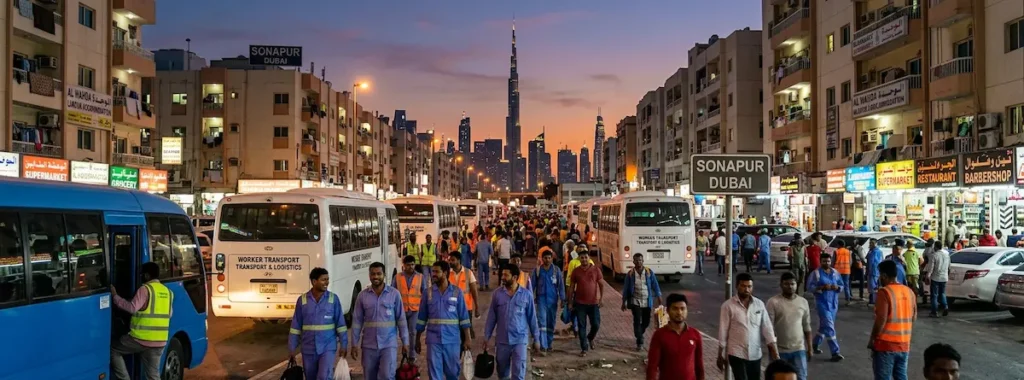
how workforce housing hubs like Sonapur function as a commuting base for thousands of Dubai’s workers, since the same public bus logic connecting Al Musalla Station to Dubai applies across most of the northern emirates’ labour accommodation zones.
If you’re travelling regularly and want to stay connected on the road, it also helps to compare Etisalat’s UAE data plans before your trip, so you’re not caught without data while checking live bus timings on the way to the station.
For readers who deal with cross-emirate logistics beyond passenger travel, our guide to Dubai Trade’s container enquiry system covers the freight side of the UAE’s transport network, which runs alongside the same road corridors used by intercity buses.
Conclusion
Al Musalla Station, whether you mean the Sharjah terminal in Rolla or the Ajman terminal in Liwara, remains one of the more dependable ways to move around the northern emirates without a car. Between the affordable fares, decent facilities, and direct links into Dubai’s own transport network, it continues to serve thousands of daily commuters, students and visitors. Knowing the right timings, routes and card system before you travel makes the whole experience considerably smoother, and hopefully this guide has covered exactly what you needed before your next trip.
Frequently Asked Questions
Where exactly is Al Musalla Station located?
There are two stations with this name. One sits in Rolla, Sharjah, near Rolla Square, and the other is in Liwara, Ajman, close to the city’s Corniche and central government offices.
What time does Al Musalla Station open and close?
The Sharjah terminal generally runs from around 5:00 AM to 11:00 PM, extending closer to midnight on weekends. The Ajman terminal typically runs from around 5:45 AM to between 10:00 PM and midnight depending on the route.
Does Al Musalla Station connect to Dubai?
Yes. Both terminals run direct intercity services to Dubai. The Ajman route ends at Rashidiya Station, giving passengers a direct connection onto the Dubai Metro’s Red and Blue Lines.
Which travel card do I need at Al Musalla Station?
Use a Sayer Card for the Sharjah terminal and a Masaar Card for the Ajman terminal. If your journey continues into Dubai’s own bus or metro network, you will need a Nol Card as well.
Is there parking available near Al Musalla Station?
Limited short-term parking exists near both terminals, though spaces are often full during morning and evening peak hours, so arriving early or using a taxi is generally more reliable.
Are the stations accessible for passengers with disabilities?
Yes, both terminals provide wheelchair ramps, accessible pathways and priority seating on most intercity buses.
What is the Google rating for Al Musalla Station?
Both the Sharjah and Ajman terminals currently sit at around 4.4 out of 5 on Google Maps, based on passenger reviews covering staff helpfulness, cleanliness and route frequency.
Can I pay with cash at Al Musalla Station?
Cash is accepted at the ticket counters of both terminals, though many regular commuters prefer a Sayer or Masaar card for faster boarding.
How early should I arrive before my bus departs?
Arriving ten to fifteen minutes before departure is generally enough, though on popular intercity routes during peak hours, allowing a little extra time is safer.
Is Al Musalla Station the same as Al Jubail Bus Station in Sharjah?
No. Al Jubail Bus Station is Sharjah’s larger, main intercity terminal near the Blue Souq, while Al Musalla Station in Rolla is a separate, smaller hub used mainly for city routes and select intercity services.
Disclaimer: Information about Al Musalla Station, including routes, timings, fares, and facilities, may change. Please confirm the latest details with the relevant transport authority before travelling.
Related Posts
Sonapur Dubai: The Workforce Hub Powering the UAE Economy
Etisalat UAE Data Plans: Daily, Weekly, Monthly & Unlimited Deals
Dubai Trade Container Enquiry: Complete UAE Tracking Guide
Sharjah Al Jubail Bus Station — Wikipedia
Roads and Transport Authority, Sharjah (SRTA) — official site