
Mussafah is one of those parts of Abu Dhabi that almost everyone has heard of, yet few people outside the area truly understand. It is not a tourist district. It is a working district, filled with warehouses, workshops, labour accommodation blocks, and a steadily growing number of family communities. Right in the middle of daily life here sits Mussafah Bus Station, the transport point that quietly keeps thousands of people moving every single day. Whether you live in the area, work there, or are planning a move to this side of the capital, knowing how this station actually functions will save you time, money, and a fair share of frustrating mornings. This guide walks through everything a regular commuter needs to know, from the exact location and route network to fares, facilities, and a few honest tips gathered from people who use the place week in and week out.
Where Mussafah Bus Station Sits On The Map
Mussafah Bus Station is located inside the Mussafah Industrial Area, roughly 25 kilometres southwest of central Abu Dhabi, near Abu Ayoub Al Ansari Street. The station is within easy reach of the Shabiya residential sectors, particularly sectors 10, 11, and 12, where a large share of the district’s population lives. Commuters coming from Dalma Mall, ICAD, or Khalifa City generally find the station straightforward to reach thanks to a grid of feeder roads that were built specifically to handle Mussafah’s heavy industrial traffic. If you would like the wider picture of how public transport is organised across the emirate, the Abu Dhabi bus service overview on Wikipedia is a useful starting point before diving into the Mussafah-specific details below.
The surrounding blocks are a practical mix of labour accommodation buildings, small supermarkets, cafeterias, and repair workshops, so the station rarely feels isolated, even during the quieter stretches of the day. It is not a glamorous location by any stretch, but it is dependable, and dependability is exactly what a working population needs from its transport hub.
Why This Station Matters So Much
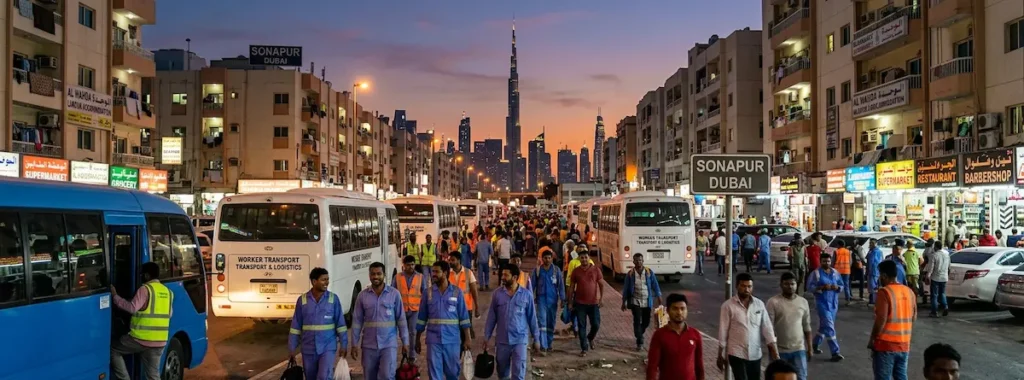
Most transport hubs in Abu Dhabi handle a mix of tourists and residents. Mussafah Bus Station is different. It exists almost entirely for people who need to get to work, get home, or connect onward to another emirate. Factory staff, technicians, delivery drivers, office employees, and small business owners all pass through this station at some point during their week. Because Mussafah is one of the largest industrial zones in the UAE, demand on this station stays constant rather than seasonal, which is part of the reason the authorities keep adjusting service frequency and adding routes here instead of treating it as a minor stop on the wider network.
For families who have recently relocated to the area, or who are weighing up a move for work reasons, transport access often becomes the deciding factor between one neighbourhood and another. If relocation logistics are on your mind as well, it is worth reading through a practical breakdown of what movers and packers typically charge in the capital region, which our team covered in detail in this guide on the cost of movers and packers in Dubai, since many of the same pricing principles apply across Abu Dhabi’s industrial belt.
Getting To Mussafah Bus Station
There are several practical ways to reach the station depending on your starting point.
- By public bus: routes originating from Abu Dhabi city centre, Khalifa City, and Mohammed Bin Zayed City all pass through or terminate close to the station.
- By taxi or ride hailing: Careem and standard Abu Dhabi taxis operate around the station at all hours, which matters if you arrive late at night after a long shift.
- By private car: informal parking is available around the station, though spaces fill up quickly during shift-change hours, typically early morning and late afternoon.
- On foot: workers living in the nearby Shabiya accommodation blocks can usually reach the station within fifteen minutes on foot from most sectors.
None of these options are complicated on their own, but timing matters. Arriving fifteen minutes before a shift change tends to mean longer queues and a fuller bus, so seasoned commuters often build in extra buffer time rather than cutting it close.
| Information | Details |
|---|---|
| Bus Station Name | Musaffah Bus Station (MBZ City Bus Station) |
| Official Name | MBZ City Bus Station |
| Category | Bus Depot / Public Bus Station |
| Google Rating | ⭐ 4.2/5 |
| Total Google Reviews | 2,470+ Reviews |
| Address | 28 Abu Hadith Street, Mohamed Bin Zayed City, ME12, Abu Dhabi, United Arab Emirates |
| City | Abu Dhabi |
| Country | United Arab Emirates (UAE) |
| Location | Mohamed Bin Zayed City (MBZ City), Abu Dhabi |
| Opening Hours (Friday) | 5:00 AM – 12:00 AM |
| Opening Hours (Saturday) | 5:00 AM – 12:00 AM |
| Opening Hours (Sunday) | 5:00 AM – 12:00 AM |
| Opening Hours (Monday) | 5:00 AM – 12:00 AM |
| Opening Hours (Tuesday) | 1:00 PM – 12:00 AM |
| Opening Hours (Wednesday) | 5:00 AM – 12:00 AM |
| Opening Hours (Thursday) | 5:00 AM – 12:00 AM |
| Contact Number | +971 800 850 |
| Nearby Services | Taxi stand, parking, shops, restaurants, and local businesses |
| Available Features | Directions, Save, Nearby, Share, Send to Phone |
| Facilities | Covered waiting areas, seating benches, bus bays, passenger information, nearby shops, restrooms, taxi pickup points, and parking |
| Bus Services | Local and regional public bus services connecting Abu Dhabi and surrounding areas |
| Primary Users | Daily commuters, residents, students, workers, and visitors |
| Accessibility | Accessible by public buses, taxis, ride-hailing services, and private vehicles |
| Nearby Areas Served | Mohamed Bin Zayed City, Musaffah, Khalifa City, Abu Dhabi City, and nearby communities |
| Overview | MBZ City Bus Station, commonly referred to as Musaffah Bus Station, is one of Abu Dhabi’s major public transportation hubs, offering reliable bus services, comfortable waiting facilities, and convenient connections across the emirate. |
Bus Routes From Mussafah Bus Station
The station handles a mix of local city routes, suburban connections, and limited intercity services. The table below summarises the main routes commuters rely on most, though schedules can shift slightly depending on demand and road works in the area.
| Route | Connects To | Typical Frequency |
| E102 | Ibn Battuta area, Dubai (weekend/select service) | Roughly every 75-90 minutes |
| 160 / 161 / 162 / 163 | Abu Dhabi city centre and Corniche area | Every 20-30 minutes, peak hours tighter |
| 111 / 116 | ICAD industrial zones | Every 15-20 minutes on weekdays |
| 210 / 218 | Mohammed Bin Zayed City (MBZ) | Every 25-35 minutes |
| Local feeder lines | Dalma Mall and nearby retail clusters | Every 30-40 minutes |
Route 111 tends to be the busiest during weekday mornings since it links the station directly with the ICAD industrial clusters where a large portion of the workforce is employed. If you are new to the area, it is worth spending your first week simply observing which routes fill up fastest at which hours before settling into a fixed routine.
Timings And Frequency
Service generally begins in the early morning hours and continues until close to midnight, with the busiest windows falling around typical shift-change periods. On weekdays, core routes such as 111 and 160 run every fifteen to twenty minutes during peak hours, stretching out to roughly every thirty minutes during quieter midday periods. Weekend timings tend to be slightly more relaxed, with longer gaps between departures on most routes except the ones serving Dalma Mall, which sees steady weekend footfall from families doing their shopping.
A practical habit among regular commuters is to check live timings through the official transport app rather than relying purely on posted schedules, since roadworks and traffic around the industrial zone can shift arrival times by several minutes without much warning.
Fares And Payment Methods
Almost every route departing from Mussafah Bus Station requires a Hafilat card, which is Abu Dhabi’s standard public transport smart card. Cash payments directly to drivers are generally not accepted, so first-time visitors should plan to purchase or top up a card at the station counters before boarding. Fares themselves remain modest compared to private transport options, and the card system also allows for smoother transfers if your journey requires switching from one route to another partway through.
For intercity travel toward Dubai, passengers typically need a separate Dubai-side card for the connecting leg of the journey once they cross into the neighbouring emirate, so it is worth carrying both cards if your commute regularly crosses that border.
Passenger Travel Experience
Mussaffah Town Bus Terminal is one of the busiest and most practical transport hubs in Abu Dhabi’s industrial district, serving thousands of workers, residents, and visitors every day. The terminal is designed to handle heavy commuter traffic while offering a comfortable travel experience for passengers.
Travelers will find covered waiting areas, ample seating benches, and digital information screens displaying bus routes and departure timings. During the hot summer months, the air-conditioned waiting halls provide welcome relief and make waiting for buses much more comfortable. The station is generally well maintained, with clean platforms and organized boarding areas that help keep passenger movement smooth throughout the day.
Several useful amenities are available within or near the terminal. Passengers can easily access snack shops, cafés, ATMs, restrooms, and taxi pickup points, making the station convenient for both short trips and longer journeys. A customer help desk is also available to assist travelers with route information, ticket guidance, and general inquiries.
One of the biggest advantages of the terminal is its excellent connectivity. From here, commuters can catch public and private buses to various parts of Abu Dhabi, including residential neighborhoods, industrial zones, and key city destinations. The terminal also offers intercity bus services, and many travelers use it to reach Dubai, especially during the busy weekend period from Friday to Sunday.
Overall, Mussaffah Town Bus Terminal stands out as a clean, affordable, and reliable transportation hub. While some passengers feel that additional restroom capacity would improve the experience during peak hours, the terminal remains one of the most convenient places to start a bus journey in Abu Dhabi thanks to its wide route network, good seating arrangements, and essential commuter facilities.
Facilities At The Station
Mussafah Bus Station has been gradually upgraded over recent years to handle its growing passenger numbers. Facilities on site typically include:
- Covered waiting areas with seating, offering some relief from direct sun during the hotter months
- Separate prayer rooms for men and women
- Public restrooms maintained by station staff
- Digital information boards displaying route numbers and estimated arrival times
- A steady presence of security personnel, along with camera coverage across the main platforms
Small food stalls and kiosks operate just outside the main station building, giving commuters a quick option for tea, snacks, or a proper meal before a longer journey. None of it is fancy, but for a station built around function rather than tourism, it covers the essentials well.
Intercity Travel From Mussafah
Beyond local Abu Dhabi routes, Mussafah Bus Station also plays a role in intercity travel. The E102 service, in particular, connects the station with destinations across the border in Dubai on a limited schedule, giving commuters a way to skip a transfer through the main Abu Dhabi bus terminal entirely. If you regularly travel toward Dubai and want to understand how the city’s arterial road network fits into that journey, our detailed guide to Sheikh Zayed Road in Dubai breaks down the landmarks and stretches you will pass along the way.
Al Ain is another common intercity destination, reached through connecting services via the central Abu Dhabi terminal rather than a direct route from Mussafah. Anyone planning a same-day round trip should factor in the connection time at the central terminal, since missing it can add well over an hour to a journey that would otherwise be fairly quick.
Tips For First-Time Commuters
- Load your Hafilat card with more credit than you think you need, since top-up counters are not always staffed during late hours.
- Travel just before or well after shift-change windows if you want a seat rather than standing room.
- Keep a printed or saved screenshot of your route number handy until you memorise the local numbering system, since signage can be easy to misread when the station is busy.
- Carry small change for the food kiosks outside the station, as some do not accept card payments.
- If you are new to the wider Abu Dhabi transport network, spend an afternoon exploring nearby routes on a quiet weekend before relying on them for a work commute.
Nearby Places Worth Knowing About
The area around Mussafah Bus Station is practical rather than scenic, but a few useful landmarks sit within easy reach. Dalma Mall remains the largest retail and dining option nearby, popular with families on weekends. ICAD’s industrial clusters are a short ride away and form the backbone of daily commuter traffic through the station. For those who want a break from the industrial landscape, Khalifa Park in central Abu Dhabi offers a proper green space reachable by connecting through the city centre routes; our full visitor guide to Khalifa Park in Abu Dhabi covers what to expect if you decide to make the trip.
Workers and new residents settling into the Mussafah area also tend to need banking access early on, whether for salary transfers or day-to-day transactions. If you are still deciding where to open an account, our roundup of the best banks in Dubai for expats covers criteria that apply just as well across Abu Dhabi’s industrial and residential communities.
Accessibility At The Station
Ramps and level walkways connect the main platforms at Mussafah Bus Station, making movement reasonably manageable for wheelchair users and for anyone travelling with heavy bags or work equipment. Staff on site are generally willing to assist passengers who need extra time boarding, particularly during quieter midday hours when buses are less crowded. That said, peak-hour crowding can still make navigation difficult for anyone with mobility limitations, so travelling slightly outside the busiest windows is usually the more comfortable choice.
Families travelling with young children or elderly relatives will also find the layout manageable, since the main platforms sit close to the drop-off area and do not require long stretches of walking across uneven ground. Staff at the information counter are generally approachable if you need directions or help figuring out which platform a particular route departs from, which is useful on a first visit when the numbering system can feel unfamiliar.
Seasonal And Weather Considerations
Summer heat changes the rhythm of the station noticeably. Between roughly May and September, waiting areas fill up faster during midday simply because commuters try to minimise time spent outdoors, so the covered shelters become genuinely valuable rather than a nice extra. Buses themselves run air-conditioned throughout the year, but the walk between the drop-off point and the platform can feel long under peak summer sun, especially for anyone carrying tools or shopping bags. Winter months bring a noticeably calmer atmosphere at the station, with slightly longer queues in the evening as more people choose to walk short distances instead of taking a taxi for the last stretch home.
Rain is rare in Abu Dhabi, but when heavier showers do arrive, they tend to slow traffic around the industrial roads leading into Mussafah, which can push bus arrivals back by ten to fifteen minutes. It rarely causes serious disruption, but it is one more reason experienced commuters prefer checking live updates rather than trusting a fixed schedule blindly.
How The Station Has Evolved
Mussafah itself has grown steadily from a purely industrial zone into a mixed community with a genuine residential character, and the bus station has had to keep pace. Earlier versions of the facility were far more basic, with limited shelter and minimal signage. Over time, the operating authority has added better seating, clearer digital displays, and more structured queuing lanes for the busiest routes. The number of daily services has also expanded to match population growth in the surrounding Shabiya sectors, where new accommodation blocks continue to be built for both workers and families.
This gradual improvement mirrors what has happened across much of Abu Dhabi’s public transport system, where older, informal stops have slowly been replaced with proper stations offering consistent facilities. Mussafah is a good example of that shift, precisely because the volume of daily passengers here has forced faster upgrades than some quieter suburban stops elsewhere in the emirate.
Common Mistakes To Avoid
- Assuming cash works on board: almost every route requires a loaded Hafilat card, and drivers are not equipped to accept cash fares.
- Ignoring shift-change timing: arriving during the busiest hour of the day often means standing for the entire journey.
- Ignoring live schedule updates: posted timetables are a helpful baseline, but roadworks near the industrial zone can shift actual arrival times.
- Forgetting a second transport card for cross-border trips: Dubai-bound journeys typically require a separate card once you cross the emirate boundary.
- Underestimating connection time at the central terminal for onward journeys to Al Ain or other emirates.
Final Thoughts
Mussafah Bus Station is not built to impress visitors, and it does not try to be. It is built to move a working population efficiently, day after day, through one of the busiest industrial corridors in the UAE. Once you understand the route numbers, the fare system, and the rhythm of shift-change hours, the station becomes far less intimidating and genuinely useful. Whether your daily journey ends at a warehouse in ICAD, an office in the city centre, or a connecting bus toward Dubai, a little preparation goes a long way toward making that commute smoother.
Frequently Asked Questions
Where exactly is Mussafah Bus Station located?
It sits inside the Mussafah Industrial Area, close to Abu Ayoub Al Ansari Street and the Shabiya residential sectors, about 25 kilometres southwest of central Abu Dhabi.
Which card do I need to travel from this station?
A Hafilat card is required for almost every local and intercity route departing from here. It can be loaded and topped up at the station counters.
Can I travel to Dubai directly from Mussafah?
Yes. The E102 service connects Mussafah with destinations in Dubai on a limited schedule, giving commuters a way to skip a transfer through the main Abu Dhabi bus terminal.
Is the station open all night?
Core routes run from early morning until close to midnight, though frequency drops sharply after evening peak hours. Night owls should check timings in advance rather than assume a bus will be waiting.
Are there toilets and prayer rooms at the station?
Yes, the station has separate prayer areas for men and women along with public restrooms, seating areas, and basic shaded waiting zones.
Is the station accessible for people with mobility needs?
Ramps and level walkways connect the main platforms, making it reasonably manageable for wheelchair users and anyone travelling with heavy luggage.