Riyadh does not announce itself the way older Middle Eastern capitals do. There is no ancient skyline waiting on a postcard, no single monument that sums up the city in one photograph. What Riyadh offers instead is contrast: a mudbrick fortress standing a short taxi ride from a glass tower with an inverted arch at its peak, a desert canyon that drops away into nothing an hour outside a city of more than seven million people, a souk that has sold the same handicrafts for over a century sitting beside a mall with a private cinema. Anyone arriving expecting a single defining landmark usually leaves with a longer list than they planned for.
This guide splits that list into two halves. The first covers the attractions most tourists arrive looking for, the heritage sites, museums, and skyline viewpoints that anchor a typical itinerary. The second half covers the spots residents actually use on a normal weekend, the parks, lakes, and neighbourhood routines that rarely make it into a standard brochure. Together they add up to twenty-five places worth knowing before a trip to the Saudi capital, along with a quick-reference table, a seasonal planning chart, and answers to the questions most first-time visitors ask.
Quick Reference: Riyadh’s Top Attractions at a Glance
Before the full breakdown, here is a snapshot of ten of the most searched-for attractions in the city, useful for anyone building a rough itinerary before diving into the details below.
Attraction
Best For
Area
Approx. Entry Fee
Best Time
Edge of the World
Hiking, sunset views
Northwest Riyadh
Free (guide extra)
Oct – Mar
Masmak Fortress
History, architecture
Ad-Dirah, old town
Free
Year-round, mornings
At-Turaif, Diriyah
UNESCO heritage
Diriyah
SAR 40-90
Oct – Apr, evenings
Al Bujairi Terrace
Dining, night views
Diriyah
Free entry
Evenings, year-round
National Museum
Culture, artefacts
Al Murabba
SAR 10-30
Weekday mornings
Kingdom Centre Sky Bridge
Skyline photos
Olaya
SAR 65-90
Sunset
Souq Al Zal
Souvenirs, bargaining
Ad-Dirah
Free entry
Afternoons
Wadi Hanifah
Nature, family picnics
Central-west Riyadh
Free
Cooler months
Riyadh Zoo
Family day out
Al Malaz
SAR 10-20
Morning, weekdays
Red Sand Dunes
Adventure, quad biking
Outskirts, east
Tour dependent
Oct – Mar
Top 15 Famous Attractions in Riyadh for Tourists
These are the sites that consistently top most visitors’ plans, ranging from centuries-old heritage districts to the newer landmarks that have reshaped the skyline over the past two decades.
1. Edge of the World (Jebel Fihrayn)
Northwest of the city, the Tuwaiq escarpment drops away into open desert, and this stretch of cliff has earned the nickname Edge of the World among hikers and photographers. Reaching the viewpoint means a rough drive off the paved road followed by a short walk over limestone rock, but the payoff is a sheer drop of several hundred metres with nothing but haze and horizon beyond it. Locals treat it as a weekend ritual, arriving before dawn with flasks of qahwa to watch the sun climb over the plateau. Sturdy shoes, a full tank of fuel, and a fully charged phone are essential since signal is patchy once you leave the highway.
2. Masmak Fortress
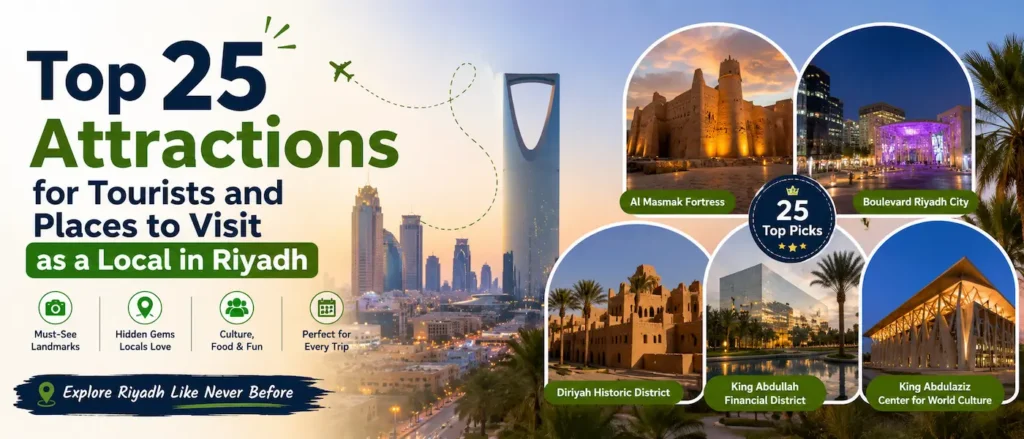
Built from mudbrick and clay more than a century ago, Masmak Fortress sits at the heart of the old quarter and marks the spot where the modern Saudi state effectively began. Inside, the rooms have been converted into a modest museum with weapons, manuscripts, and photographs that trace the kingdom’s founding. What makes the visit memorable is not scale but atmosphere: thick walls, narrow doorways, and a courtyard that still smells faintly of palm wood. Entry is free, and the fort rarely takes more than an hour to explore, making it an easy add-on to a morning spent wandering the surrounding souks.
3. At-Turaif District, Diriyah
Diriyah was the first capital of the Saudi state, and its restored quarter, At-Turaif, is Riyadh’s only UNESCO World Heritage Site. Earth-toned Najdi architecture, reconstructed palaces, and shaded walkways sit above the Wadi Hanifah valley, and the whole district is lit dramatically after sunset. Guided tours explain the political history behind the walls, while independent visitors can simply wander the lanes and take in the craftsmanship. The site has been developed extensively in recent years with museums, cafes, and cultural venues added around its edges, so it now rewards a half-day rather than a quick stop.
4. Al Bujairi Terrace
Facing At-Turaif across the valley, Al Bujairi Terrace has become the city’s favourite spot for an evening out. Restaurants line a paved promenade with the illuminated fort as a backdrop, ranging from casual Saudi kitchens to upscale international dining. Families gather here after Isha prayer, couples come for the view, and tour groups often finish their Diriyah visit with dinner on the terrace. On Thursday nights, cultural performances and occasional traditional dancing add to the buzz, so arriving a little before sunset secures the best tables and photo angles.
5. National Museum of Saudi Arabia
For a single-stop education in the peninsula’s history, the National Museum in Al Murabba is hard to beat. Eight galleries move chronologically from pre-Islamic archaeology through the Prophet’s era to the unification of the kingdom, using multimedia displays alongside genuine artefacts. Air conditioning and clear English labelling make it a comfortable choice during the hotter months, and the ticket price is modest compared with similar institutions abroad. Plan for around two hours if you want to read through the exhibits properly rather than skim past them.
6. Kingdom Centre Sky Bridge
The inverted-arch silhouette of Kingdom Centre Tower is Riyadh’s most recognisable piece of skyline, and the enclosed sky bridge near its summit offers a 360-degree view over the city. Two express lifts carry visitors up in under a minute, and the bridge itself has glass flooring sections for anyone brave enough to look straight down. Sunset is the busiest and most rewarding time to visit, when the desert light turns the tower blocks amber. The mall beneath the tower also includes a women-only floor of boutiques, a detail visitors often find distinctive.
7. Al Faisaliah Tower and Globe
A short distance from Kingdom Centre, Al Faisaliah Tower is easy to identify by the golden glass globe suspended near its peak. The observation deck offers a different angle on the same skyline, usually with shorter queues than its more famous neighbour. At street level, the surrounding plaza and shopping galleries make for a pleasant stroll, particularly after dark when the tower’s lighting scheme changes. Combining both towers in one evening gives a fuller sense of how quickly Riyadh’s architecture has changed over the past two decades.
8. Souq Al Zal
Tucked beside Masmak Fortress, Souq Al Zal has traded in handicrafts, antiques, and spices for well over a hundred years. Narrow alleys are lined with stalls selling dallah coffee pots, incense burners, daggers, and old coins, and haggling is expected rather than frowned upon. It is one of the few places in the city where the pace of commerce still feels unhurried, and vendors are generally happy to explain the history behind an item if asked. Afternoons are quieter than mornings, giving more room to browse without the crowds.
9. Wadi Hanifah
Running for more than a hundred kilometres through the western side of the city, Wadi Hanifah was once a neglected drainage channel and has since been rehabilitated into a chain of parks, lakes, and walking trails. Families picnic along its banks on Friday afternoons, cyclists use the paved sections, and birdwatchers come for the wetland pockets that attract migratory species. Because it threads through several districts, it is easy to pick a section close to wherever you are staying rather than trekking across the city for a single entry point.
10. Riyadh Zoo
Spread across roughly fifty-five acres in Al Malaz, Riyadh Zoo houses well over a thousand animals from dozens of species, with enclosures designed to loosely mimic natural habitats. It remains one of the more affordable family outings in the city and gets particularly lively on public holidays. Shaded seating areas and food kiosks make it manageable even in warmer weather if you arrive early, before the midday heat sets in. It is not the most modern zoo in the region, but its central location keeps it a reliable choice for a half-day with children.
11. Red Sand Dunes
A short drive from the city limits, the Red Sand Dunes owe their colour to iron oxide in the sand and offer some of the most accessible desert adventure near Riyadh. Quad bikes, dune buggies, and camel rides are all on offer through licensed operators, and sunset turns the dunes a deep rust colour that photographs beautifully. It is a popular Thursday and Friday destination for residents looking to unwind after the working week, so booking a tour slightly ahead of time avoids the busiest crowds.
12. Imam Turki Bin Abdullah Grand Mosque
Overlooking Al Safat Square in the historic Qasr Al Hukm district, this mosque blends traditional Najdi motifs with contemporary engineering and is among the largest in the city. While entry is generally limited to worshippers, the exterior architecture and the surrounding square are worth a walk-through, especially in the early evening when the square fills with families and street vendors. The nearby government quarter and Al Dirah market make it easy to fold into the same outing as Masmak Fortress and Souq Al Zal.
13. King Abdullah Park
Spanning a substantial stretch of land in northern Riyadh, King Abdullah Park pairs manicured gardens with musical fountains, jogging tracks, and cafes. A modest entrance fee keeps the crowds thinner than at free public parks, which appeals to families looking for a calmer outing. The evening fountain and light show is the highlight for most first-time visitors, and benches around the main lake offer a good vantage point without needing to stand in the crowd near the water’s edge.
14. Murabba Palace
Once the residence of the kingdom’s founder, King Abdulaziz, Murabba Palace takes its name from its distinctive square, or murabba, floor plan. The building now functions as a museum displaying furnishings, weapons, and personal items connected to the royal family’s early history. It sits close to the National Museum, so many visitors combine the two into a single cultural morning. The mudbrick construction and comparatively small scale make it a quieter, more intimate stop than some of the city’s larger heritage sites.
15. Boulevard Riyadh City
During the cooler months, Boulevard Riyadh City becomes one of the busiest entertainment zones in the capital, hosting concerts, themed festivals, and pop-up attractions as part of the wider Riyadh Season programme. Outside the festival calendar it still operates as a lively dining and retail strip, with restaurants staying open well past midnight. It captures a side of Riyadh that surprises many first-time visitors, one built around live entertainment, international acts, and a genuinely late-night social scene.
Best Time of Year to Visit Riyadh’s Outdoor Attractions
Riyadh’s desert climate has a direct effect on which attractions are worth prioritising in a given month. The chart below gives a rough sense of outdoor comfort through the year, useful for deciding when to schedule hikes, desert tours, and long walks around Diriyah or Wadi Hanifah.
Month Group
Outdoor Suitability
Rating
December – February
██████████
Excellent
March & November
████████
Very Good
October
███████
Good
April & September
████
Fair, early morning only
May – August
██
Limited, indoor plans best
Travellers combining Riyadh with a wider Gulf itinerary often ask how the pace compares elsewhere in the region. For a look at how outdoor life shifts with the seasons on the coast, Kite Beach Dubai’s local guide is a useful comparison, and travellers curious about green spaces elsewhere in the Gulf may also enjoy this overview of Quranic Park in Dubai.
Top 10 Places to Visit in Riyadh Like a Local
Beyond the well-documented tourist trail, Riyadh residents have their own rotation of weekend spots. These places rarely headline a travel brochure, but they explain how the city actually spends its evenings and Fridays off.
16. Al Hair Farms and Lakes
South of the city, the Al Hair area combines small working farms with a scattering of lakes, the best known being what locals call the Ringing Bird Lake. Weekend visitors come to fish, picnic, and buy fresh produce directly from roadside stalls. It has none of the polish of the city’s newer developments, and that is precisely its appeal for residents seeking a slower pace close to home.
17. Wadi Namar Lake
A dam-fed lake south of Riyadh, Wadi Namar is a favourite spot for evening walks, paddle boating, and simple photography. Palm trees line parts of the shore, and the surrounding hills make for a scenic backdrop rarely associated with a desert capital. It draws mostly local families rather than tour groups, which keeps the atmosphere relaxed.
18. Tuwaiq Palace Grounds
Designed by international architects and set against the Tuwaiq escarpment, this palace complex is better known today for hosting cultural events, exhibitions, and diplomatic functions than for public visits. When open events are scheduled, the building’s sweeping curved facade, inspired by desert rock formations, is worth the trip on its own.
19. Ushaiqer Heritage Village
A little over an hour from the city, Ushaiqer preserves rows of mudbrick houses, narrow lanes, and a restored mosque dating back centuries. It receives far fewer visitors than Diriyah, which makes it appealing to residents who want a heritage day trip without the crowds. Early morning visits avoid both the heat and the tour buses.
20. Heet Cave
Formed in ancient limestone outside the city, Heet Cave offers a rare change of scenery for a region defined by open desert. Guided tours lead visitors past underground pools and natural skylights where sunlight filters through cracks in the rock ceiling. A light jacket is worth packing, since the interior stays noticeably cooler than the surface.
21. Riyadh Park and Sahara Mall
Malls function as genuine social hubs in Riyadh rather than pure shopping destinations, and Riyadh Park and Sahara Mall are two of the more established local favourites. Beyond retail, both host cinemas, indoor entertainment, and a wide range of casual dining, making them a practical choice on days when the heat rules out outdoor plans.
22. Al Dirah Old Town Cafes
Around the historic Al Dirah district, a cluster of small cafes and coffee roasteries has grown up in restored heritage buildings, serving Saudi coffee alongside modern specialty brews. It is a favourite meeting spot for locals in the late afternoon and offers a more understated alternative to the bigger cafe chains found elsewhere in the city.
23. Salam Park
One of the older public parks in Riyadh, Salam Park remains popular with families for its shaded lawns, lake views, and evening food carts. It rarely appears on tourist itineraries, yet on any given Friday it is filled with residents enjoying a free, unhurried outdoor evening.
24. Janadriyah Festival Grounds
For part of the year, the grounds northeast of the city host the Janadriyah National Festival, a celebration of Saudi heritage featuring traditional dance, poetry, crafts, and regional cuisine stalls from across the kingdom. Locals plan entire weekends around it, and it offers visitors a concentrated dose of Saudi culture that would otherwise take weeks of travel to experience firsthand.
25. Hittin and Olaya Evening Walkways
As temperatures drop after sunset, the wide pavements and pocket parks of the Hittin and Olaya districts fill with residents walking, jogging, and stopping at open-air coffee kiosks. It is not a single attraction so much as a nightly ritual, and joining it is one of the simplest ways for a visitor to feel like part of the neighbourhood rather than a tourist passing through.
Festivals and Seasonal Events Worth Planning Around
A handful of recurring events shape the local calendar and are worth checking before booking a trip. The Janadriyah National Festival brings folk performances, poetry, and craft stalls from every region of the kingdom to the outskirts of the city. Riyadh Season, running through the cooler months, turns venues such as Boulevard Riyadh City into concert grounds and themed entertainment districts. Ramadan and the two Eid holidays also transform the atmosphere citywide, with extended evening hours at markets, mosques lit for night prayers, and family gatherings spilling into public spaces after sunset.
Planning Tips for Visiting Riyadh’s Top Attractions
Group heritage sites together: Masmak Fortress, Souq Al Zal, and the Imam Turki Bin Abdullah Grand Mosque all sit within walking distance of each other in the old town.
Save Diriyah for a half-day: At-Turaif and Al Bujairi Terrace work best as a late-afternoon-into-evening combination, ending with dinner overlooking the fort.
Book desert trips through a licensed operator: this applies to both the Edge of the World and the Red Sand Dunes, since signage is limited and the terrain is unforgiving without local knowledge.
Dress modestly in public spaces: loose, knee-and-shoulder-covering clothing is expected of both men and women across museums, mosques, and markets.
Carry cash in smaller denominations for souk purchases, even though most malls and restaurants accept cards without issue.
A Brief Note on Riyadh’s Location and Scale
Riyadh sits roughly at the geographic centre of the Arabian Peninsula and has grown into one of the largest cities in the region; further background on its history and administration is available on Wikipedia’s Riyadh entry. Travellers comparing notes with other visitors before their trip sometimes also check discussion threads on Quora for first-hand impressions, though official tourism sources remain the more reliable starting point for practical planning.
Final Thoughts
Riyadh rewards visitors who are willing to move between two speeds: the deliberate, unhurried pace of its heritage quarter and the fast, modern rhythm of its towers and entertainment districts. Twenty-five attractions is enough to fill a solid week, but even a short weekend can capture the city’s contrast if it is built around a handful of anchors, one heritage site, one skyline view, one desert outing, and one evening spent doing exactly what locals do after sunset. That mix, more than any single landmark, is what makes the Saudi capital worth the detour.
Frequently Asked Questions About Visiting Riyadh
What is Riyadh best known for among visitors?
Riyadh is best known for combining a fast-growing modern skyline with well-preserved heritage sites such as At-Turaif and Masmak Fortress. The city also has a reputation for its traditional souks, desert day trips, and, more recently, its seasonal entertainment programme that draws crowds from across the region.
How many days are enough to see the top attractions in Riyadh?
Three to four days is usually enough to cover the major sites at a comfortable pace, including one day set aside for a desert excursion such as the Edge of the World or the Red Sand Dunes. Travellers with less time can prioritise Diriyah, Masmak Fortress, and one skyline viewpoint.
Is Riyadh walkable for tourists?
Certain districts, such as Al Bujairi Terrace, Boulevard Riyadh City, and parts of Olaya, are pleasant on foot, particularly in the evening. The city overall is spread out and built around road networks, so taxis or ride-hailing apps remain the most practical way to move between neighbourhoods.
What is the best time of year to visit Riyadh?
The cooler months from November through March offer the most comfortable conditions for outdoor sightseeing, hiking, and desert trips. Visitors travelling in summer should plan outdoor activities for early morning or evening and rely on indoor attractions such as museums and malls during the hottest hours.
Are there free attractions in Riyadh?
Yes. Masmak Fortress, Souq Al Zal, Wadi Hanifah, Al Bujairi Terrace, and most public parks charge no entry fee, which makes it possible to build a rewarding itinerary on a limited budget.
What should first-time visitors avoid missing in Riyadh?
Diriyah’s At-Turaif District is generally considered the single most important stop, given its UNESCO status and central role in Saudi history. Pairing it with an evening at Al Bujairi Terrace gives a strong first impression of both heritage and contemporary Riyadh in one visit.
Can non-Muslim visitors enter mosques in Riyadh?
Access varies by mosque. Some historic mosques allow respectful visits by non-Muslims outside prayer times, while others, including several of the larger grand mosques, are reserved for worshippers. Checking locally before visiting is recommended.