
Riyadh does not try to convince you of anything. It simply sits there, half desert capital and half glass-and-steel metropolis, and lets you figure out which version you like better. One afternoon you are standing on a cliff edge staring at nothing but sand and sky, and by evening you are riding a glass elevator to a sky bridge suspended between two towers. That contrast is exactly why the city has become one of the fastest-growing travel destinations in the Gulf region.
If you are putting together a Saudi Arabia itinerary and Riyadh is your starting point, this guide walks you through the ten experiences that genuinely deserve a spot on your list, along with practical details on cost, timing, and what to expect once you arrive. No filler, no recycled listicle points copied from a dozen other sites. Just a straightforward, locally informed look at what makes Riyadh worth the trip.
Quick Overview: Riyadh’s Top Attractions at a Glance
Before diving into the details, here is a snapshot table to help you plan your days efficiently.
| Attraction | Type | Average Cost | Time Needed | Visitor Rating |
|---|---|---|---|---|
| Edge of the World | Nature & Hiking | Free (transport extra) | 4-6 hours | 4.8 / 5 |
| At-Turaif & Diriyah | History & UNESCO Site | Paid entry | 3-4 hours | 4.7 / 5 |
| Al Masmak Fortress | Museum & Heritage | Free | 1-2 hours | 4.5 / 5 |
| National Museum of Saudi Arabia | Museum | Paid entry | 2-3 hours | 4.6 / 5 |
| Kingdom Centre Sky Bridge | Landmark & Viewpoint | Paid entry | 1-1.5 hours | 4.7 / 5 |
| Al Faisaliah Tower | Landmark & Dining | Paid entry (viewing) | 1 hour | 4.4 / 5 |
| Boulevard Riyadh City | Entertainment District | Free entry (rides extra) | 3-5 hours | 4.6 / 5 |
| Wadi Hanifah & Wadi Namar | Nature & Parks | Free | 2-3 hours | 4.3 / 5 |
| Souq Al Zal | Traditional Market | Free (shopping extra) | 1-2 hours | 4.2 / 5 |
| Red Sand Dunes & Riyadh Zoo | Adventure & Family | Paid entry | 3-4 hours | 4.4 / 5 |
Visitor Rating Comparison
To give you a clearer visual sense of how travelers rank these experiences, here is a simple rating breakdown based on average visitor feedback collected across major travel platforms.
Edge of the World          ████████████████████ 4.8
At-Turaif & Diriyah        ███████████████████  4.7
Kingdom Centre Sky Bridge  ███████████████████  4.7
National Museum            ███████████████████  4.6
Boulevard Riyadh City      ███████████████████  4.6
Al Masmak Fortress         ██████████████████   4.5
Red Sand Dunes & Zoo       ██████████████████   4.4
Al Faisaliah Tower         █████████████████    4.4
Wadi Hanifah & Wadi Namar  █████████████████    4.3
Souq Al Zal                █████████████████    4.2
Now let us go through each of these one by one.
1. The Edge of the World (Jebel Fihrayn)
Locally known as Jebel Fihrayn, the Edge of the World is part of the Tuwaiq Mountain escarpment northwest of the city, and it is exactly the kind of place photographs never do justice. You walk along a narrow rocky ridge and suddenly the ground simply stops, dropping several hundred metres into an endless desert plain below. Standing at that point genuinely feels like reaching the boundary of the map.
The site sits roughly two hours from central Riyadh, and the last stretch requires a four-wheel-drive vehicle since the road turns into loose gravel and sand tracks. Most visitors join a guided tour that includes transport, a short hike, and sometimes a sunset picnic, since the lighting during golden hour turns the cliffs a deep orange that photographs beautifully. Wear proper walking shoes, carry water, and avoid the midday sun if you are visiting during the hotter months.
Entry to the site itself is free, but tour packages that include a driver, guide, and refreshments are the easiest way to get there safely, especially if you are not comfortable navigating unmarked desert roads yourself.
2. At-Turaif District and Historic Diriyah
Diriyah is where the story of modern Saudi Arabia actually begins. The At-Turaif District within it was the birthplace of the First Saudi State, founded in the eighteenth century, and its mud-brick walls, narrow alleyways, and restored palaces have been preserved with remarkable care. The historic district overlooks Wadi Hanifah and the Diriyah oasis, and it was constructed from mudbrick in the distinctive Najdi architectural style as a palatial royal citadel.
The site carries serious historical weight too. It was the first capital of the Saudi Dynasty in the heart of the Arabian Peninsula, and it bears witness to the Najdi architectural style that is specific to the central region of the peninsula. If you want to verify the site’s international recognition before you go, the UNESCO World Heritage Centre listing for At-Turaif has the full inscription details.
Adjacent to the historic quarter is Bujairi Terrace, a row of restaurants and cafes with a direct view of At-Turaif lit up at night. It has become one of the more popular dinner spots in the city, and booking a table with a terrace view is worth the small premium. Give yourself at least half a day here, since rushing through Diriyah defeats the purpose of visiting it.
3. Al Masmak Fortress
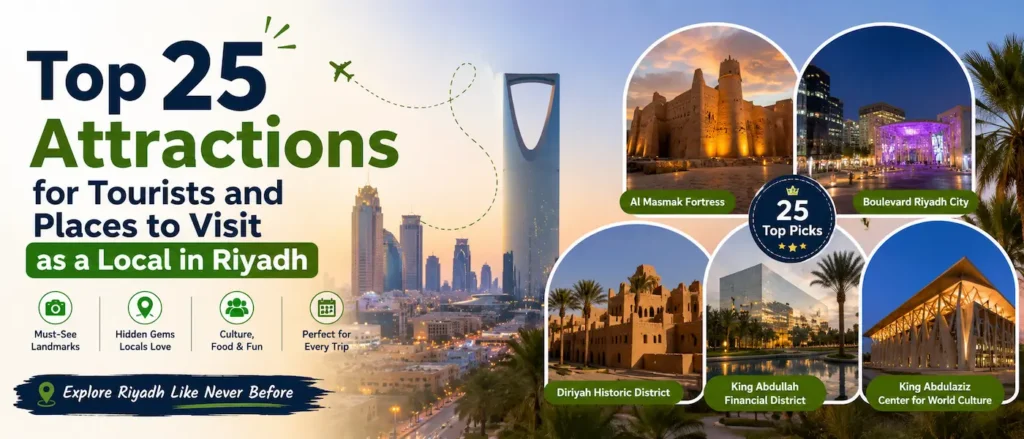
Right in the heart of old Riyadh sits Al Masmak Fortress, a thick-walled clay and mud structure that once guarded the city against invaders. It played a central role in the reunification of Saudi Arabia in the early twentieth century, and bullet marks are still visible in one of its wooden doors, a small but striking reminder of that history.
The fortress was converted into a museum decades ago, and today it houses exhibits, old weapons, and photographs that walk you through the city’s transformation from a walled desert settlement to a modern capital. Entry is free, and because it sits close to Souq Al Zal, most visitors combine both stops in a single outing. The fortress is compact, so an hour or two is usually enough unless you enjoy lingering over historical detail.
4. National Museum of Saudi Arabia
If you only visit one museum in Riyadh, make it this one. Located within the King Abdulaziz Historical Center, the National Museum traces the entire arc of Saudi history, from pre-Islamic archaeology and a massive meteorite display through to the founding of the modern Kingdom. The building itself is worth admiring too, with a modernist design that blends contemporary architecture with traditional Arabic motifs.
The exhibits are arranged chronologically across several large halls, making it easy to follow the narrative even if you are not a history enthusiast. Interactive displays and well-translated signage make this an accessible stop for international visitors, and the surrounding gardens are pleasant for a short walk afterward. Plan for two to three hours if you want to read through the exhibits properly rather than rushing.
5. Kingdom Centre Tower and the Sky Bridge
The Kingdom Centre Tower is one of the most recognisable landmarks on the Riyadh skyline, instantly identifiable by the inverted arch near its top. That arch houses the Sky Bridge, an enclosed walkway roughly 300 metres above the ground that gives you a full panoramic view of the city stretching out in every direction.
Sunset is the best time to go up, since the fading light softens the desert haze and the city lights begin switching on below you. The tower also houses a shopping mall with international brands and a dedicated luxury wing, so you can easily combine the viewing deck with a few hours of shopping or a meal at one of the restaurants on the upper floors. Tickets for the Sky Bridge are sold on-site, and arriving slightly before sunset helps you avoid the busiest crowd window.
6. Al Faisaliah Tower
A short distance from Kingdom Centre stands Al Faisaliah Tower, distinguished by the golden globe near its summit. It was one of the first skyscrapers to define Riyadh’s modern skyline, and it remains a favourite for both architecture enthusiasts and diners, since the globe houses an upscale restaurant with sweeping views over the city.
Unlike Kingdom Centre, the appeal here leans more toward the dining experience than a standalone observation deck, so if you are the type of traveler who enjoys pairing a meal with a view, this is the better choice of the two towers. Evening visits are recommended, particularly when the building’s exterior lighting is switched on for special occasions, casting the tower in a striking glow visible from several kilometres away.
7. Boulevard Riyadh City
Boulevard Riyadh City is the largest entertainment complex in the country, and it is designed to keep you occupied for an entire evening rather than a quick stop. It is divided into several sub-zones, including a dancing fountain, a replica of Times Square, a garden area, and a dedicated sports zone, giving visitors a wide range of things to see and do in one location.
The district comes alive after sunset, when temperatures drop and the crowds pick up, with live performances, seasonal festivals, and a dense concentration of restaurants and cafes catering to every taste. During the annual entertainment season, Boulevard hosts concerts and pop-up events that draw visitors from across the region, so it is worth checking the local event calendar before your trip in case something coincides with your visit. Parking can get busy on weekends, so arriving early in the evening gives you a better shot at a convenient spot.
8. Wadi Hanifah and Wadi Namar
For a break from the concrete and glass, head to Wadi Hanifah, a long valley that runs through Riyadh and has been rehabilitated into a green corridor of parks, walking paths, and small lakes. It is one of the few spots in the city where you will see genuine greenery against the backdrop of rocky hills, and it is popular with local families for weekend picnics.
Wadi Namar, a section within this valley, is particularly known for its small waterfall area and lake, which forms after seasonal rainfall and draws crowds looking for a rare patch of water in an otherwise arid landscape. Early morning or late afternoon visits are best, both for the lighting and to avoid the day’s peak heat. There is no entry fee, and the walking trails are well maintained enough for a relaxed stroll rather than a serious hike.
9. Souq Al Zal
Souq Al Zal is Riyadh’s traditional market, tucked close to Al Masmak Fortress in the old quarter. Unlike the polished malls elsewhere in the city, this souq retains the feel of an old-world Arabian marketplace, with narrow lanes packed with antiques, traditional daggers, handwoven textiles, spices, and old coins.
Bargaining is expected here, and prices are rarely fixed, so take your time browsing rather than accepting the first quote. It is one of the better places to pick up an authentic souvenir rather than a mass-produced one, and the atmosphere alone, with vendors calling out and the smell of incense drifting between the stalls, makes it worth the visit even if you do not intend to buy anything. Visit in the late afternoon when the heat eases and the market gets busier.
10. Red Sand Dunes and Riyadh Zoo
For a different kind of thrill, the Red Sand Dunes on the outskirts of the city offer sandboarding, quad biking, and dune bashing against a backdrop of deep rust-coloured sand that looks dramatic in photographs. It is a popular half-day trip for adrenaline seekers and families alike, and most tour operators include a camel ride as part of the package.
If you are travelling with children or simply want a calmer pace, Riyadh Zoo is a solid alternative, housing dozens of species and offering a straightforward, family-friendly outing. Keep in mind that some visiting policies at the zoo can differ for single adults versus families, so it is worth checking current entry rules before you go, particularly if you are travelling without children.
Best Time to Visit Riyadh
Riyadh sits in the middle of the Arabian Peninsula, which means summers are intensely hot and dry, often making outdoor activities uncomfortable between midday and late afternoon. The more comfortable window for sightseeing runs from late autumn through early spring, when temperatures drop into a far more pleasant range and outdoor attractions like the Edge of the World and Boulevard Riyadh City become genuinely enjoyable rather than something to endure.
This cooler stretch also lines up with the city’s peak entertainment season, when festivals, concerts, and pop-up markets fill the calendar across venues like Boulevard and Diriyah. If your schedule is flexible, aim for this period, since it lets you spend more time outdoors without rushing between air-conditioned stops.
Practical Tips for First-Time Visitors
A few practical notes can save you time and frustration once you land. Riyadh is not a particularly pedestrian-friendly city, and distances between major attractions are often too far to walk, so budget for taxis, ride-hailing apps, or a rental car depending on your comfort level with local traffic. Modest dress is expected in public spaces, particularly around religious and government sites, so pack accordingly regardless of the season.
Friday mornings tend to be quieter across the city since it falls on the weekend, making it a good window for visiting popular sites without heavy crowds. If you are combining a Riyadh trip with other Gulf destinations, it is worth comparing how similar landmark towers and waterfront districts are laid out elsewhere in the region; for instance, travelers exploring the UAE side of the Gulf often draw comparisons between Riyadh’s Boulevard district and Dubai’s own landmark corridors such as the one detailed in this guide to Sheikh Zayed Road in Dubai.
Families planning a broader Gulf itinerary sometimes pair a Riyadh park visit with a stop at a green space elsewhere in the region, and if that describes your plans, this breakdown of Khalifa Park in Abu Dhabi is a useful reference point for comparing how the two cities approach public parks. Similarly, those curious about how cultural landmarks are presented across the Gulf might find this guide to Quranic Park in Dubai a helpful companion read alongside Diriyah and the National Museum.
Final Thoughts
Riyadh rewards visitors who give it more than a rushed layover. The city’s identity is built on contrast, a centuries-old mud-brick citadel sitting a short drive from glass towers piercing the skyline, and a desert cliff edge that feels a world away from the buzz of Boulevard Riyadh City at night. Spend a few unhurried days moving between these extremes, and you will understand why Riyadh has quietly become one of the most compelling capitals to explore in the Gulf region.
Whether you are drawn in by the history of Diriyah, the view from the Sky Bridge, or the quiet rush of standing at the edge of a desert cliff, Riyadh has a way of turning a short visit into a memorable one.
Frequently Asked Questions
Is Riyadh worth visiting for tourists?
Yes. Riyadh combines a UNESCO World Heritage Site, several major museums, a striking modern skyline, and desert landscapes within a single city, giving visitors a genuine mix of history and modern entertainment in one trip.
How many days do I need in Riyadh?
Two to three days is generally enough to cover the major highlights listed in this guide, including Diriyah, the National Museum, Al Masmak Fortress, and at least one desert excursion such as the Edge of the World.
Is the Edge of the World safe to visit without a guide?
It is possible to drive there independently with a suitable four-wheel-drive vehicle, but the unmarked desert roads and steep cliff edges make a guided tour a safer and more convenient option, especially for first-time visitors.
What is the best time of day to visit Kingdom Centre Sky Bridge?
Sunset offers the best combination of natural light and city views, since you get to see the skyline transition from daylight to illuminated night views in a single visit.
Do I need to dress modestly in Riyadh?
Yes, modest dress is generally expected in public areas across the city, and it is advisable for both men and women to dress conservatively, particularly near government buildings, mosques, and heritage sites.
Is Diriyah the same as At-Turaif?
At-Turaif is a specific historic district within the larger area of Diriyah. Diriyah refers to the broader region, while At-Turaif is the UNESCO-listed citadel and mud-brick quarter within it.
Are the attractions in this guide suitable for families with children?
Most of them are. The National Museum, Boulevard Riyadh City, Riyadh Zoo, and Wadi Hanifah are particularly family-friendly, while the Edge of the World and Red Sand Dunes are better suited to older children and adults comfortable with hiking or off-road travel.
Is public transport reliable for getting between attractions? Riyadh’s public transport network has been expanding, but many attractions are still more easily reached by taxi, ride-hailing apps, or a rental car, especially for locations further from the city centre such as Diriyah and the Edge of the World.